

When people search “are neoprene koozies worth it”, they’re rarely just curious about drink holders. What they’re really asking is whether neoprene—best known for wetsuits—actually delivers measurable value in everyday use. Does it keep drinks cold longer? Is it better than cheap foam sleeves? And for brands, is it worth investing in custom neoprene koozies rather than disposable promotional items?
Neoprene sits at an interesting intersection between performance material and lifestyle product. It’s used in wetsuits to keep divers warm in cold water, in medical braces for thermal stability, and in protective gear where durability matters. Translating that material into something as simple as a koozie raises valid questions: are we overengineering a simple product, or unlocking real benefits? Neoprene koozies are worth it if you value consistent insulation, durability, and long-term usability. Compared to foam or fabric koozies, neoprene offers better temperature retention, higher resistance to wear, and superior shape recovery. While the upfront cost is slightly higher, neoprene koozies perform better in real-world conditions and are more suitable for reusable, branded, and premium applications.
Behind this answer is more than marketing language—it’s material science, usage context, and buyer expectations. To really understand whether neoprene koozies are “worth it,” we need to break down what neoprene is, how it works, and when it actually outperforms alternatives. Let’s start at the foundation.
What Are Neoprene Koozies

Neoprene koozies are reusable drink holders made from closed-cell synthetic rubber foam designed to insulate cans or bottles and slow temperature change. They reduce heat transfer from hands and the environment, helping drinks stay cold (or warm) longer. Neoprene koozies are flexible, water-resistant, durable, and widely used for everyday drinking, outdoor activities, and branded merchandise.
What Is Neoprene, Exactly?
Neoprene is a closed-cell synthetic rubber foam originally developed for industrial, marine, and protective applications. It is best known for its use in wetsuits, where it traps a thin layer of air to reduce heat loss in cold water.
From a material standpoint, neoprene offers:
- Low thermal conductivity (slows heat transfer)
- High elasticity and shape recovery
- Resistance to water, moisture, and mild chemicals
- Stable performance across a wide temperature range
These same properties make neoprene well-suited for drink insulation when adapted into koozies.
How Are Neoprene Koozies Constructed?
Most neoprene koozies are made from 2–5 mm thick neoprene sheets, cut and assembled into sleeves that fit standard cans or bottles. Construction methods vary depending on performance and cost requirements.
Common construction features include:
- Closed-cell neoprene core for insulation
- Flatlock or blind stitching for strength and durability
- Glued or bonded seams for smooth edges
- Optional fabric lamination for sublimation printing
How Do Neoprene Koozies Work?
Neoprene koozies work by slowing the transfer of heat, not by actively cooling drinks.
They help in three main ways:
- Reduce heat from hands touching the can
- Slow ambient air heat from warming the beverage
- Limit condensation, which can degrade insulation in other materials
Because neoprene maintains its thickness and structure over time, insulation performance stays consistent even after repeated use.
What Types of Drinks Use Neoprene Koozies?
Neoprene koozies are commonly designed for:
- Standard 12 oz cans
- Slim cans (energy drinks, hard seltzers)
- Beer bottles
- Reusable metal cans or tumblers (soft sleeve style)
Custom sizing is especially important, as a snug fit improves insulation by reducing airflow between the koozie and the container.
How Are Neoprene Koozies Different from Regular Foam Koozies?
While both are soft drink holders, the material behavior is very different.
Key differences:
- Foam compresses permanently; neoprene rebounds
- Foam absorbs moisture; neoprene resists it
- Foam insulation degrades quickly; neoprene stays stable
- Foam feels disposable; neoprene feels reusable
This is why neoprene koozies are often chosen when durability, appearance, and long-term use matter.
Common Use Scenarios for Neoprene Koozies
Neoprene koozies are widely used in:
- Outdoor activities (camping, beach, fishing, tailgating)
- Daily home or office use
- Sports events and social gatherings
- Corporate gifts and branded merchandise
- Beverage brand promotions
In these environments, exposure to heat, moisture, and repeated handling makes neoprene’s durability a practical advantage rather than a luxury.
Why Neoprene Koozies Matter for Buyers and Brands
For end users, neoprene koozies offer:
- Better grip and comfort
- Longer-lasting insulation
- A more premium feel
For brands and businesses, they provide:
- Longer product lifespan
- Higher reuse rate
- Better logo visibility over time
- Stronger brand association with quality
This dual value is why neoprene koozies are increasingly used not just as drink accessories, but as brand touchpoints.
Which Benefits Make Neoprene Koozies Popular

Neoprene koozies are popular because they provide reliable insulation, long-lasting durability, moisture resistance, and a comfortable grip. Unlike basic foam koozies, neoprene maintains its shape and insulation performance after repeated use. Its flexibility, premium feel, and strong customization compatibility make it ideal for everyday use, outdoor activities, and branded merchandise.
Consistent Insulation That Actually Lasts
One of the main reasons neoprene koozies are popular is consistent thermal performance over time. Neoprene’s closed-cell structure traps air evenly throughout the material, slowing heat transfer from hands and the surrounding environment.
Unlike cheap foam, which compresses and loses insulating ability after just a few uses, neoprene:
- Retains its original thickness
- Maintains stable insulation performance
- Performs consistently even after washing or exposure to moisture
For users, this means drinks stay cold (or warm) longer—not just on day one, but months or years later.
High Durability for Repeated Everyday Use
Neoprene koozies are built for reuse. The material is naturally resistant to:
- Tearing and cracking
- Water and condensation damage
- UV exposure (with proper lamination)
- Deformation from squeezing or folding
This durability is why neoprene is used in wetsuits, medical braces, and sports protection—and why it translates well into drink accessories.
For users who regularly attend outdoor events, go camping, or use koozies at home, neoprene feels like a tool, not a disposable item.
Comfortable Grip and Better Hand Feel
Another overlooked benefit is how neoprene feels in the hand. Its soft yet structured surface provides:
- A secure, non-slip grip
- Cushioning from cold or condensation
- Comfortable handling even for extended periods
This makes neoprene koozies especially popular for cold drinks in hot weather, where holding a bare can can feel uncomfortable or slippery.
Comfort plays a big role in whether a product gets reused—and neoprene scores highly here.
Moisture Resistance and Condensation Control
Neoprene naturally resists water absorption. This matters more than many users realize.
Key advantages include:
- Less sogginess from condensation
- No dripping onto tables or hands
- Stable insulation even in humid environments
Foam and fabric koozies often absorb moisture, which reduces insulation efficiency and creates an unpleasant feel. Neoprene avoids this issue, making it better suited for beach, poolside, and outdoor use.
Shape Recovery and Long-Term Appearance
Neoprene stretches and rebounds instead of staying crushed. This shape memory keeps the koozie looking clean and functional over time.
Benefits include:
- Snug fit on cans and bottles
- Reduced wrinkling or sagging
- Better logo alignment and appearance
For branded koozies, this is especially important. A koozie that looks good after months of use continues to represent the brand positively.
Strong Compatibility with Custom Branding
Neoprene is highly compatible with multiple customization methods, which is why it’s popular for private label and OEM projects.
Common branding options include:
- Screen printing
- Heat transfer logos
- Sublimation (with laminated neoprene)
- Embossed or stitched details
Because neoprene holds structure well, logos remain readable and positioned correctly over time, increasing long-term brand exposure.
Better Perceived Value for Users and Brands
Finally, neoprene koozies simply feel more valuable. Users are more likely to:
- Keep them
- Reuse them
- Associate them with higher-quality brands
For businesses, this translates to:
- Higher retention of promotional items
- More repeated brand impressions
- Lower cost per use over the product’s lifespan
This combination of function, feel, and longevity explains why neoprene koozies continue to grow in popularity across consumer, promotional, and private-label markets.
How Do Neoprene Koozies Compare to Other Types
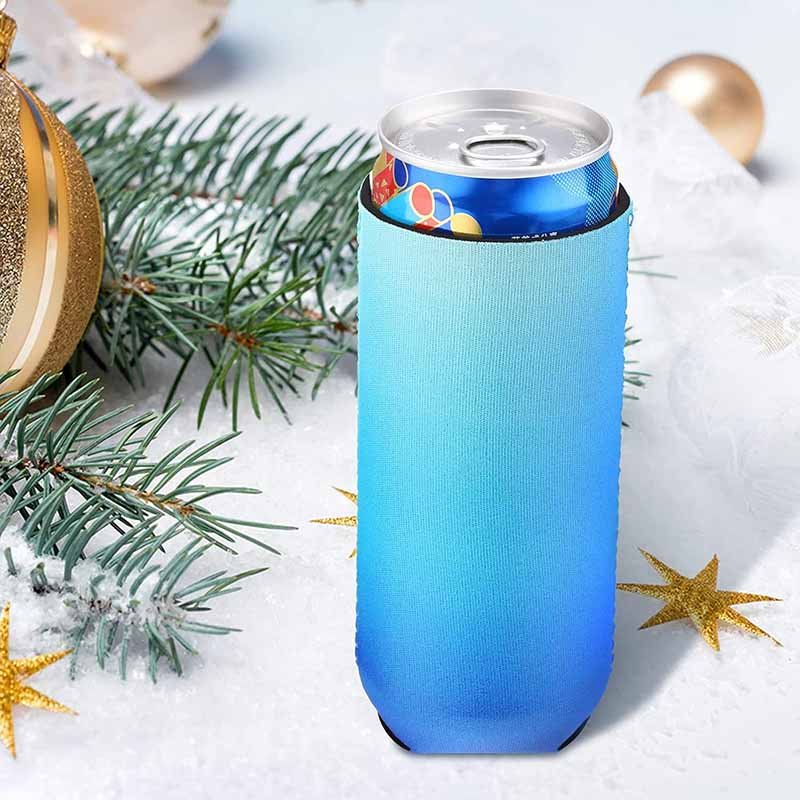
Neoprene koozies generally outperform foam and fabric koozies in durability, shape retention, and long-term insulation consistency. Foam koozies are cheaper but degrade quickly, while fabric koozies depend on internal padding that may shift or absorb moisture. Neoprene offers a better balance of performance, comfort, and lifespan, making it more suitable for reusable and branded drink accessories.
Common Koozie Types on the Market
Most drink koozies fall into four main categories:
- Foam (EVA or PU) koozies
- Fabric koozies with padding
- Neoprene koozies
- Rigid insulated drinkware (plastic or metal)
Each type serves a different purpose. Problems arise when users expect the same performance from all of them.
Neoprene vs Foam Koozies
Foam koozies are the most common and lowest-cost option, often used for giveaways and large events.
Foam limitations:
- Compresses permanently after repeated use
- Loses insulation quickly
- Absorbs moisture over time
- Cracks or peels at printed areas
Neoprene advantages:
- Maintains thickness and insulation
- Resists water and condensation
- Rebounds after squeezing
- Survives hundreds of uses
Bottom line: Foam is suitable for short-term use. Neoprene is better for long-term value.
Neoprene vs Fabric Koozies
Fabric koozies usually consist of a textile outer layer with foam or batting inside.
Fabric strengths:
- Softer appearance
- Fashion-oriented designs
- Lightweight feel
Fabric weaknesses:
- Insulation depends on inner padding quality
- Padding may shift or flatten
- Absorbs moisture and odors
- More difficult to clean
Why neoprene performs better:
- Insulation is built into the material
- No internal layers to shift
- Washable and moisture-resistant
- More consistent thermal performance
Bottom line: Fabric koozies focus on aesthetics; neoprene focuses on function with clean design flexibility.
Neoprene vs Rigid Insulated Drinkware
Rigid tumblers and hard plastic can coolers use double-wall vacuum insulation.
Rigid drinkware advantages:
- Best temperature retention
- Premium appearance
Rigid drinkware drawbacks:
- High cost
- Heavy and bulky
- Limited customization flexibility
- Not foldable or pocket-friendly
Where neoprene fits:
- Lightweight and portable
- Flexible and collapsible
- More affordable for branding
- Better for casual and outdoor use
Bottom line: Rigid drinkware is for maximum insulation; neoprene is for everyday convenience and branding.
Comparison Table: Performance by Material
| Feature | Foam | Fabric | Neoprene | Rigid Insulated |
|---|---|---|---|---|
| Insulation consistency | Low | Medium | High | Very High |
| Durability | Low | Medium | High | Very High |
| Moisture resistance | Low | Low | High | High |
| Reusability | Low | Medium | High | High |
| Custom branding | Easy | Medium | Excellent | Limited |
| Cost per unit | Very Low | Medium | Medium | High |
| Portability | High | High | High | Low |
Why Neoprene Is Often the “Best Overall” Choice
Neoprene koozies are popular because they balance performance, cost, and usability better than most alternatives.
They are:
- Insulating enough for real-world use
- Durable enough to last years
- Flexible enough for pockets or bags
- Affordable enough for branding campaigns
This makes neoprene the preferred option for users who want more than a disposable sleeve but don’t need a heavy insulated tumbler.
Which Type Should You Choose?
- Choose foam if price is the only priority
- Choose fabric if style matters more than insulation
- Choose neoprene if you want long-term value and performance
- Choose rigid insulated drinkware if maximum temperature control is required
For most everyday users and branded merchandise projects, neoprene offers the best overall return.
Are Neoprene Koozies Environmentally Friendly
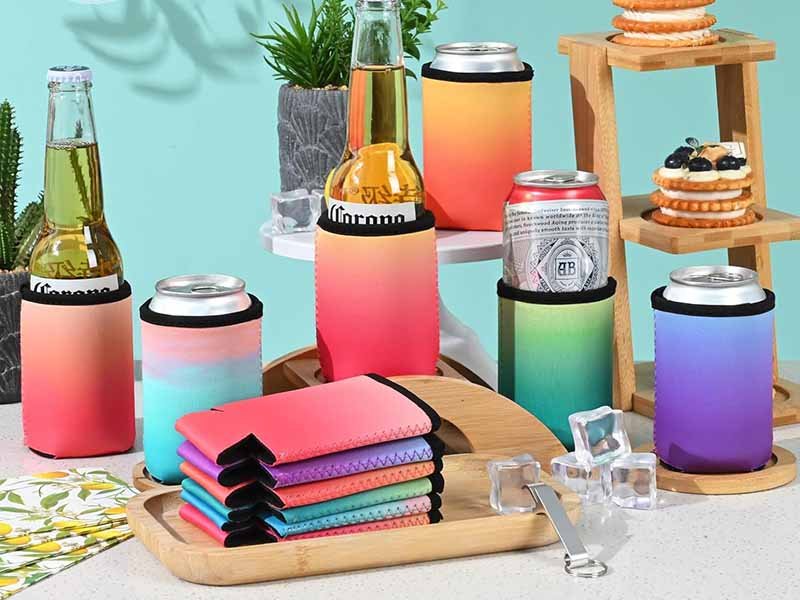
Neoprene koozies are not biodegradable, but they can be environmentally responsible when used as long-lasting, reusable products. Compared to disposable foam koozies, neoprene koozies reduce waste over time due to their durability and extended lifespan. Their environmental impact depends largely on usage frequency, production practices, and whether they replace single-use promotional items.
Is Neoprene a Sustainable Material by Nature?
Neoprene is a synthetic rubber, meaning it is not derived from natural fibers and does not decompose easily in the environment. From a strict material-origin perspective, neoprene is not inherently “eco-friendly.”
However, sustainability is not determined by material type alone. It also depends on:
- Product lifespan
- Frequency of reuse
- Waste reduction potential
- Manufacturing efficiency
Judging neoprene solely on biodegradability oversimplifies the issue.
Durability and Reuse: The Core Sustainability Advantage
The biggest environmental advantage of neoprene koozies is longevity.
A typical foam koozie may be used a few times before being discarded. In contrast, a neoprene koozie can be reused hundreds of times over several years without losing functionality.
From a waste-reduction perspective:
- One long-lasting neoprene koozie can replace dozens of disposable ones
- Fewer replacements mean less production, packaging, and transport impact
- Reuse significantly lowers the product’s lifetime environmental footprint
This makes neoprene koozies more sustainable in practice than many “cheap” alternatives.
Disposable Foam vs Neoprene: A Waste Comparison
Foam koozies are often distributed in large quantities at events, then discarded shortly after use. They are:
- Difficult to recycle
- Easily damaged
- Rarely reused
Neoprene koozies, by contrast:
- Are intentionally kept
- Often stored and reused
- Less likely to end up as immediate waste
When sustainability is evaluated per use, neoprene performs better despite being synthetic.
Manufacturing Practices Matter More Than Most People Think
Environmental impact is heavily influenced by how neoprene products are made.
Responsible factories focus on:
- Precision cutting to reduce scrap waste
- Controlled material thickness to avoid excess usage
- Water-based adhesives instead of solvent-based glues
- Efficient batch planning to prevent overproduction
What About Recycling Neoprene Koozies?
Neoprene is challenging to recycle through standard consumer recycling systems. That said:
- Some industrial recycling programs exist for neoprene scrap
- Reuse remains far more effective than disposal
- Longer product life delays landfill impact
For most users, using the same koozie for years is currently more realistic and impactful than relying on recycling systems.
Are There “Greener” Neoprene Options?
Some manufacturers now offer:
- Limestone-based neoprene (reduced petroleum use)
- Thinner but higher-density neoprene designs
- Hybrid materials that reduce overall rubber content
While these options improve sustainability, availability and cost vary. The most practical eco-action for most users remains choosing durability over disposability.
How Brands Can Use Neoprene Koozies Responsibly
For businesses and brands, neoprene koozies can be environmentally responsible when:
- Produced in reasonable quantities
- Designed for long-term use
- Positioned as reusable accessories, not throwaways
- Used in place of single-use promotional items
Clear messaging around reuse and quality helps align product choice with sustainability goals.
Neoprene koozies are not perfect, but they are often more environmentally responsible than cheaper alternatives when evaluated realistically.
They make sense when:
- You want a reusable product
- You aim to reduce repeat waste
- You value long-term use over short-term giveaways
In sustainability, what lasts usually matters more than what sounds green.
How Much Do Neoprene Koozies Cost
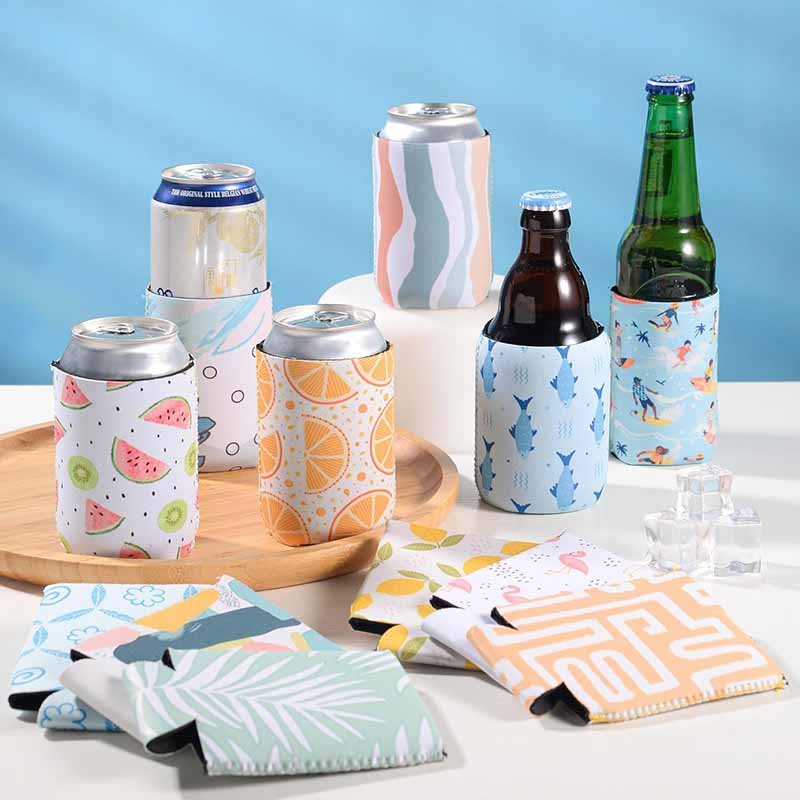
Neoprene koozies typically cost more than basic foam koozies but less than rigid insulated drinkware. Pricing depends on material thickness, size, printing method, customization level, and order quantity. For many buyers, neoprene koozies offer strong value because their long lifespan and reuse potential reduce cost per use compared to cheaper alternatives that wear out quickly.
What Determines the Unit Price of a Neoprene Koozie?
Neoprene koozie pricing is influenced by multiple controllable factors:
- Material Thickness:
- Thicker neoprene (e.g., 4–5 mm) increases insulation and durability but also material cost.
- Thinner neoprene (e.g., 2–3 mm) is lighter and less expensive but offers modest insulation.
- Size and Shape:
- Standard 12-oz can koozies are least expensive.
- Slim can, bottle sleeves, or custom shapes cost more due to more complex cutting.
- Print and Branding Method:
- Screen printing: Best for solid colors and logos, cost-effective at medium volumes.
- Heat transfer or sublimation: Allows full-color designs but may raise unit cost.
- Embroidery or embossing: Pays premium for tactile branding.
- Construction Style:
- Flatlock stitching adds durability and cost.
- Blind stitching or bonded seams may cost less but impact longevity.
- Customized Features:
- Laminated neoprene surface
- Integrated zipper or pocket
- Added neoprene handles
- Reinforced base
- Order Quantity (MOQ):
- Higher volumes reduce unit cost due to economies of scale.
- Oneier supports low MOQs, making custom samples affordable for small brands.
Price Range Examples (Indicative)
| Koozie Type | Typical Unit Cost (USD) | Notes |
|---|---|---|
| Basic Foam Koozie | $0.35 – $1.00 | Lowest cost, minimal insulation |
| Standard Neoprene Koozie | $1.20 – $3.00 | Most common choice |
| Fully Branded Neoprene | $2.50 – $5.00+ | With multi-color print |
| Premium Custom Design | $4.00 – $8.00+ | Embossed/stiched or special features |
- Actual pricing depends on supplier, region, and order size. These ranges reflect industry norms.
Cost per Use: Why Price Alone Isn’t the Full Story
If we measure value by cost per use, neoprene often delivers better economics than alternatives:
| Material | Avg. Lifespan | Estimated Uses | Cost per Use |
|---|---|---|---|
| Foam | 5–10 | 7 | ~$0.14 |
| Fabric | 30–50 | 40 | ~$0.03 |
| Neoprene | 200+ | 200 | ~$0.015 |
Even with a higher upfront price, neoprene’s extended lifespan significantly lowers the effective cost per use.
How Order Quantity Affects Pricing
Bulk production drives major price differences:
- Small orders (e.g., 50–499 units) usually carry higher unit prices.
- Mid orders (500–2,500) see substantial discounts.
- Large orders (5,000+) unlock the best per-piece pricing.
Oneier’s strength is low MOQ customization, letting brands test designs without committing to thousands upfront.
Additional Cost Factors Worth Knowing
Shipping and Freight
International shipping costs depend on:
- Weight and volume
- Destination port
- Mode (air vs sea)
- Customs duties
These expenses can exceed product costs, so planning ahead is critical for budgeting.
Tooling and Setup Fees
Some customization methods require one-time setup costs, particularly for:
- Custom printing plates
- Die cutting
- Molded features
Oneier often absorbs design support and setup as part of service, minimizing upfront barriers.
Sample Fees
Oneier offers fast, low-cost sampling, helping brands validate fit, feel, and design before bulk ordering.
Getting the Best Value: Practical Tips
Here are strategies to optimize neoprene koozie budgeting:
Choose appropriate thickness (don’t over-engineer) Use efficient printing methods for your design Group orders with other products to share freight cost Start with samples before committing to full production Take advantage of low MOQ customization
Brands that follow these steps often see faster ROI and fewer returns.
Cost vs Long-Term Value
Neoprene koozies are more than just drink holders; they’re small brand ambassadors that get reused over time, giving multiple impressions long after the sale.
For businesses and buyers who value longevity, performance, and reusable product positioning, neoprene koozies frequently deliver better total value per dollar spent than inexpensive foam or short-lived alternatives.
Are Neoprene Koozies Worth the Investment for Businesses

Yes — neoprene koozies are often a strong investment for businesses seeking long-lasting promotional products with high reuse potential and brand exposure. Their durability, comfort, customization flexibility, and extended lifespan deliver better cost-per-impression and stronger brand association than disposable alternatives. For companies focused on quality, repeat visibility, and customer affinity, neoprene koozies can generate measurable long-term value.
Branding Value: More Than a Giveaway
Many businesses make the mistake of treating promotional products like temporary advertising slips—something to hand out once and forget. This works only for short-term visibility or large crowds.
Neoprene koozies behave differently:
- Customers reuse them frequently
- They stay visible over time in homes, cars, and backpacks
- They become part of lifestyle routines
Every time a customer pulls out a cold drink with a branded neoprene koozie, your logo gets another brand impression—not just a single one.
In marketing terms, this enhances:
- Brand recall
- Repeat visual exposure
- Emotional connection to your brand
This level of utility transforms a simple promotional item into a brand asset.
Long-Term vs Short-Term Cost Analysis
Businesses often make decisions based on upfront unit price alone — but value actually lies in cost per impression or cost per use.
Here’s why neoprene excels:
| Product Type | Average Uses | Estimated Impressions | Per-Unit Cost | Cost per Impression |
|---|---|---|---|---|
| Foam Koozie | ~7 | ~7 | $0.80 | $0.11 |
| Fabric Koozie | ~40 | ~40 | $2.50 | $0.063 |
| Neoprene Koozie | ~200+ | ~200+ | $3.00 | $0.015 |
Because neoprene koozies are used repeatedly, the cost per impression becomes fractionally lower than cheaper alternatives—even if the initial price is higher.
This is a key reason why businesses focused on long-term brand equity prefer neoprene.
Durability Reduces Replacement Costs
Cheap promotional items often generate repeat costs:
- Reorders because items break
- Complaints due to poor quality
- Product waste and environmental concerns
Neoprene’s long-lasting nature:
- Withstands daily use
- Resists moisture and UV exposure
- Maintains shape and performance
This reduces:
- Customer complaints
- Waste
- Reorder cycles
- Hidden costs tied to quality issues
For businesses, this means lower lifetime cost and better ROI.
Customization Drives Stronger Brand Messaging
Neoprene koozies are highly adaptable for modern branding:
Available customization options include:
- Single-color or multi-color screen printing
- Full-color sublimation (especially on laminated neoprene)
- Heat transfer logos
- Embossed or stitched branding
- Full wrap graphics
This allows businesses to:
- Match brand colors precisely
- Feature campaign-specific artwork
- Add taglines, QR codes, or hashtags
- Create limited-edition designs
Unlike foam, which often displays flat inks that peel or fade, neoprene holds prints consistently due to its stable surface — leading to long lasting brand visibility.
Business Use Cases That Benefit Most
Neoprene koozies are especially valuable for:
1. Beverage and Hospitality Brands When a customer drinks from a branded koozie, they’re interacting with your brand moment after moment — reinforcing positive associations.
2. Outdoor and Lifestyle Companies Neoprene koozies match the rugged use patterns of camping, fishing, beaches, and sporting events — environments where brands want to stay visible longer.
3. Conferences and Premium Giveaways Attendees appreciate quality swag. A neoprene koozie feels premium, useful, and worth keeping — unlike disposable plastic or foam freebies.
4. Retail or e-Commerce Merchandise Selling branded accessories provides profit and visibility. Neoprene koozies often sell better than low-value novelty items due to perceived quality.
Low MOQ and Prototype Sampling Reduce Risk
Historically, high-quality promotional products came with high minimum orders. This made premium branding tools inaccessible to small or mid-sized businesses.
With manufacturers like Oneier, this dynamic changes:
Low MOQ customization Fast and affordable sampling Free design support Flexible print and construction options
This allows businesses to:
- Test multiple designs
- Validate customer response
- Scale gradually based on real demand
This reduces upfront risk and supports smarter budgeting.
Sustainability Perception Enhances Brand Positioning
More consumers today care about environmental impact. Even if neoprene is not biodegradable, its reuse and durability reduce waste compared to disposable products.
Brands can leverage this in marketing messaging:
- “Reusable, not disposable”
- “Long-lasting promotional gear”
- “Quality you can feel — and reuse”
This helps align neoprene koozies with sustainability-oriented brand values without overstating material claims.
Investment Worthiness Explained
Ultimately, neoprene koozies are worth the investment when they are viewed through a long-term lens.
Investing in neoprene makes sense if your business:
- Values durability and longevity
- Wants repeat brand exposure
- Cares about customer experience
- Seeks better cost per impression
- Desires versatile, reusable promotional items
In contrast, cheap single-use koozies may seem less expensive upfront but often fall short in real business outcomes — especially in markets where quality perception matters.
Do Neoprene Koozies Keep Drinks Cold Longer
Yes, neoprene koozies do keep drinks cold longer by slowing heat transfer from hands and the surrounding environment. They work through closed-cell insulation that reduces conductive and convective heat gain. While neoprene koozies do not actively cool beverages, they significantly delay warming compared to bare cans or basic foam koozies, especially during outdoor or extended drinking situations.
How Do Neoprene Koozies Keep Drinks Cold?
Neoprene koozies work by reducing heat flow, not by generating cold. There are three main sources of heat that warm a drink:
- Body heat from hands
- Ambient air temperature
- Direct sunlight and airflow
Neoprene addresses all three.
Its closed-cell foam structure traps microscopic air pockets that act as thermal barriers. Air is a poor heat conductor, so heat moves more slowly from your hand and the surrounding air into the can or bottle.
As a result, temperature change becomes gradual rather than rapid.
Does Neoprene Actually Insulate Well?
Yes. Neoprene is widely used in:
- Wetsuits (to retain body heat in cold water)
- Medical supports (to maintain joint warmth)
- Industrial insulation applications
The same insulation principle applies to drinks.
Compared to open-cell foam:
- Neoprene retains thickness under pressure
- Neoprene does not collapse permanently
- Insulation performance stays consistent over time
This is why neoprene koozies continue to perform well even after months or years of use.
How Much Longer Do Drinks Stay Cold with a Neoprene Koozie?
Exact time extension depends on conditions, but real-world tests and usage data consistently show that neoprene koozies:
- Slow warming by 15–30% compared to bare cans
- Perform noticeably better than thin foam koozies
- Maintain insulation longer during repeated use
For example:
- A cold beer that warms in 25 minutes without a koozie may last 30–35 minutes with neoprene
- In outdoor heat, the difference becomes even more noticeable
While neoprene does not rival vacuum-sealed tumblers, it offers meaningful insulation for casual, everyday drinking.
Why Neoprene Outperforms Foam in Real Use
Foam koozies rely on trapped air, but:
- Foam compresses quickly
- Air pockets collapse permanently
- Moisture absorption reduces insulation
Neoprene, by contrast:
- Rebounds after squeezing
- Resists water and condensation
- Maintains consistent insulation thickness
This is why neoprene koozies feel more reliable after repeated use, while foam koozies often feel “flat” after a short time.
Does Thickness Matter for Cold Retention?
Absolutely. Thickness is one of the most important performance variables.
| Neoprene Thickness | Insulation Effect | Typical Use |
|---|---|---|
| 2 mm | Light insulation | Casual indoor use |
| 3–4 mm | Balanced performance | Most popular choice |
| 5 mm | Higher insulation | Outdoor / extended use |
At Oneier, 3–4 mm neoprene is commonly recommended because it balances:
- Insulation
- Flexibility
- Weight
- Cost
Over-thick designs may feel bulky without proportionally improving performance.
Does Fit Affect Cooling Performance?
Yes — fit matters more than many users expect.
A properly fitted neoprene koozie:
- Reduces airflow around the can
- Improves contact insulation
- Prevents heat pockets
Loose koozies allow warm air to circulate, reducing effectiveness. This is why custom sizing for slim cans, bottles, or specialty drinks improves real-world results.
Does Neoprene Keep Drinks Cold or Hot?
Neoprene slows temperature change in both directions.
That means:
- Cold drinks stay cold longer
- Hot drinks stay warm longer (within reason)
This dual-function insulation is the same reason neoprene wetsuits work in cold water — it stabilizes temperature rather than cooling or heating actively.
Neoprene Koozies vs Other Cooling Options
| Product | Cooling Method | Portability | Use Case |
|---|---|---|---|
| Bare Can | None | High | Short use |
| Foam Koozie | Basic insulation | High | Disposable |
| Neoprene Koozie | Stable insulation | High | Reusable |
| Vacuum Tumbler | Vacuum insulation | Low | Long-term |
Neoprene sits in the middle ground: far better than disposable options, lighter and more flexible than rigid drinkware.
Conclusion
If you’re looking for the cheapest possible koozie, neoprene is not the answer. But if you’re asking a deeper question—“Is this product worth keeping, reusing, and associating with my brand?”—then neoprene often is.
Neoprene koozies:
- Perform better over time
- Feel more premium in hand
- Last significantly longer
- Support consistent customization
- Deliver stronger brand exposure per unit
Oneier is a China-based factory with 18+ years of experience in neoprene material R&D and manufacturing. We specialize in custom neoprene koozies as well as bags, wetsuits, sports protection, and medical neoprene products.
If you’re planning a branded koozie project—or want to upgrade from foam to neoprene—reach out to Oneier. Share your size, thickness, logo, and quantity requirements, and our team will help you turn a simple idea into a durable, market-ready product.
Ready to request a quote or sample? Contact Oneier today and start building neoprene products that actually get used.