
Does Neoprene Fabric Stretch? A Technical Guide for Custom Neoprene Product Buyers
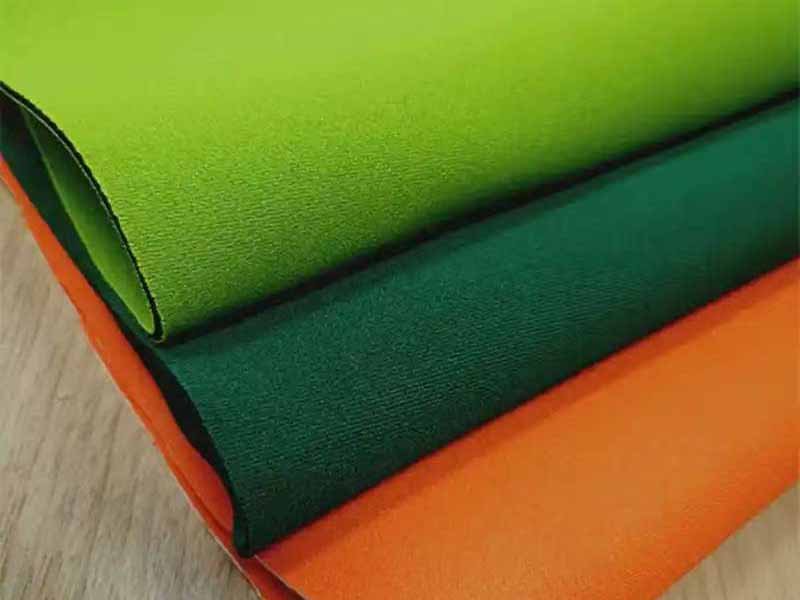
When it comes to flexible performance fabrics, neoprene stands in a category of its own.
From luxury laptop sleeves to wetsuits hugging an athlete’s form, this material adapts beautifully to motion, heat, and pressure. But how far can it really stretch — and more importantly, how does that stretch behave over time? For global buyers who specify neoprene in custom manufacturing projects, understanding this single characteristic can determine whether a product feels premium or poor.
Yes, neoprene fabric stretches — typically between 15% and 30% in length and width, depending on foam density, backing fabric, and thickness. Its rubber-based structure gives excellent recovery, returning close to its original shape after extension. That balance of flexibility and stability makes neoprene ideal for bags, koozies, gloves, and wetsuits requiring snug fit and durability.
Neoprene’s stretch is not just a technical number — it’s a design tool. Too soft, and a bag may sag; too stiff, and a wetsuit restricts movement. The art of neoprene product development lies in mastering that balance, which is exactly what professional factories like Szoneier have refined over nearly two decades.
Imagine slipping on a pair of perfectly fitted diving gloves: they cling gently yet never feel tight. That tactile comfort doesn’t happen by luck — it’s the result of precise stretch calibration. Let’s explore the science, structure, and sourcing decisions behind this remarkable material.
What Is Neoprene Fabric and What Gives It Its Stretch Property?
Neoprene is a synthetic rubber known scientifically as polychloroprene. Its elasticity comes from flexible molecular chains and microscopic air cells created during the foaming process. When combined with knit fabric backings like polyester, nylon, or spandex, neoprene gains both multidirectional stretch and rebound, making it ideal for performance and protective applications.
Neoprene begins life as polychloroprene chips, melted and expanded with nitrogen gas to form a closed-cell foam. Each cell traps air, giving the sheet buoyancy, insulation, and compressible stretch. The more uniform these cells, the smoother and more elastic the final sheet feels.
After foaming, manufacturers laminate the rubber to fabric on one or both sides. The choice of backing — nylon jersey, polyester knit, or spandex blend — determines the direction and degree of stretch:
| Backing Type | Stretch Direction | Typical Elongation % | Key Advantage |
|---|---|---|---|
| Nylon single-backed | 2-way | 10 – 20 % | Smooth feel, easy cutting |
| Polyester double-backed | 2-way | 15 – 25 % | Balanced durability |
| Spandex-blend knit | 4-way | 20 – 35 % | Maximum flexibility |
| No-back (raw foam) | Multi | > 35 % | For glued seams, high stretch |
What makes neoprene exceptional is its recovery. Unlike ordinary foam, its polymer chains act like coiled springs: once released from tension, they retract almost completely. This property is crucial for gloves, knee braces, and fitted covers where shape retention equals function.
Chemically, neoprene’s chlorine atoms stabilize the rubber, resisting oil and ozone that usually degrade natural rubber. That’s why its elasticity lasts longer under sunlight and saltwater — conditions that quickly ruin many other elastic materials.
From a buyer’s standpoint, understanding these layers allows precise specification: do you need comfort stretch or structural firmness? A neoprene factory can tailor foam density (from 30 kg/m³ to 160 kg/m³) and backing fabric to hit that sweet spot.
Does Neoprene Fabric Stretch and How Much?
Neoprene fabric typically stretches between 15 % and 35 %, depending on thickness, foam density, and whether it is two-way or four-way stretch. Thinner sheets and spandex-backed versions provide the most flexibility, while thicker closed-cell types offer more resistance. Despite stretching, neoprene retains its shape and returns to near-original size after release.
If you’ve ever pulled on a wetsuit or squeezed a bottle into a neoprene koozie, you’ve felt its distinctive resistance: soft yet strong. Quantitatively, stretch and recovery vary widely depending on how the material is built.
Typical Stretch Ranges by Thickness
| Neoprene Thickness (mm) | Elongation % (Lengthwise) | Recovery After 10 min % | Common Applications |
|---|---|---|---|
| 1.0 – 1.5 mm | 30 – 35 % | 95 % + | Fashion apparel, soft pouches |
| 2.0 – 3.0 mm | 25 – 30 % | 93 – 96 % | Gloves, light wetsuits |
| 4.0 – 5.0 mm | 20 – 25 % | 92 – 95 % | Diving suits, protective covers |
| 6.0 mm + | 15 – 20 % | 90 – 93 % | Industrial pads, equipment cases |
Thinner foams contain smaller cells that compress and recover more easily, while thick industrial grades have denser structures that resist deformation. For a bag or laptop sleeve, designers may prefer mid-thickness neoprene (3 mm) — firm enough to protect, yet flexible for comfort.
Another important variable is stretch direction.
- Two-way stretch neoprene moves along one axis (usually the width), offering stability in structured items like cases or straps.
- Four-way stretch versions expand both lengthwise and crosswise, ideal for wearable products demanding body conformity.
Environmental temperature also influences behavior: neoprene becomes slightly stiffer in cold conditions but regains elasticity once warm. That thermoplastic response is why wetsuits feel tight at first yet loosen comfortably in water.
For professional buyers, measurable data matters. Reputable manufacturers provide physical property sheets citing tensile strength (MPa), elongation at break (%), and compression set (%). A sample spec might read:
Elongation @ break = 300 % ± 10 % (ASTM D412); Compression set = ≤ 15 % (ASTM D1056).
These numbers tell engineers how far the material can flex before permanent deformation — essential for durability forecasts and quality control.
Ultimately, neoprene’s stretch is more than comfort; it’s a performance parameter affecting pattern design, seam type, and even logo application. Skilled factories calibrate every roll to ensure that when your end customer stretches a koozie or slides into a wetsuit, the material responds with smooth resilience — never sagging, never tearing.
Which Factors Influence How Much Neoprene Will Stretch and Whether It Will Hold Its Shape?
The stretch and shape retention of neoprene depend on multiple factors: foam density, cell size, lamination quality, fabric backing, and long-term exposure to heat, UV, and mechanical stress. High-density foams and double-backed constructions resist over-stretching, while spandex-laminated neoprene offers superior elasticity. Proper manufacturing control ensures consistent recovery and prevents permanent deformation.
Neoprene behaves like a “living” material—it responds dynamically to heat, humidity, and tension. For buyers developing custom products, these variables determine both comfort and lifespan.
1. Foam Density & Cell Structure
Foam density (measured in kg/m³) governs the internal flexibility of neoprene.
- Low-density (30–60 kg/m³) foams feel lighter and stretchier but compress faster under load.
- Medium-density (70–100 kg/m³) provides balanced elasticity for general accessories.
- High-density (110 kg/m³ +) foams resist deformation, ideal for protective gear and industrial pads.
| Density (kg/m³) | Stretch Range (%) | Best For | Durability Score (1–5) |
|---|---|---|---|
| 40 ± 5 | 30 – 35 % | Fashion sleeves, light covers | 2 |
| 70 ± 5 | 25 – 30 % | Koozies, mid-weight bags | 3 |
| 90 ± 5 | 20 – 25 % | Wetsuits, sport gloves | 4 |
| 120 ± 5 | 15 – 20 % | Protective or tool cases | 5 |
2. Fabric Backing
The laminated fabric dictates directional elasticity. A tight nylon jersey yields consistent two-way stretch; spandex blends create four-way flexibility. Buyers should match backing type to use case—high stretch for garments, low stretch for structured items.
3. Lamination Quality
Poor lamination introduces weak zones that delaminate under tension. Professional factories use hot-melt or solvent-free adhesive lines that maintain elasticity while ensuring bond strength above 2 kgf/cm.
4. Environmental Factors
Long exposure to UV or high heat accelerates oxidative stiffening. A neoprene glove stored in direct sunlight can lose up to 10 % of its stretch capacity within six months. Reputable suppliers test for this with accelerated aging chambers (ASTM D573).
5. Manufacturing Control
Even the cutting direction matters: cutting along the “grain” (stretch axis) improves comfort, while cross-grain cutting yields shape stability. Szoneier’s QC team often performs cyclic elongation tests (50 cycles at 25 %) to ensure recovery remains ≥ 95 %.
In short, the way neoprene is engineered and processed determines how it performs for years—not weeks.
How Does Stretch Behavior Impact Custom Neoprene Product Design (Bags, Koozies, Gloves, Covers, Wetsuits)?
Neoprene’s stretch defines product fit, durability, and comfort. Designers must balance elasticity with structure: high stretch for wearables and tight fits, moderate stretch for protective covers, and minimal stretch for bags requiring form stability. Selecting the right foam thickness, backing, and seam construction ensures products perform as intended without warping or tearing.
When a buyer requests “3 mm neoprene with soft hand feel,” that specification hides a dozen engineering decisions. Each product type interprets stretch differently.
1. Bags & Protective Covers
These need controlled elasticity. Too much stretch causes sagging, misaligned zippers, or loose fit. For laptop sleeves and camera cases, factories use double-backed neoprene (3 – 4 mm, 20 % stretch). Reinforced seams or edge binding improve dimensional stability.
2. Koozies & Drink Holders
Here, tight stretch equals function. A koozie should hug a can but still slip on easily. The sweet spot is around 25 – 30 % elongation. Thinner neoprene (2 mm) with single-jersey backing offers comfort and printability.
3. Gloves & Apparel
These demand maximum mobility. Four-way spandex-backed neoprene provides seamless conformity to joints. Manufacturers may blend varying densities across panels: softer neoprene on knuckles, firmer on palms for grip.
4. Wetsuits & Sportswear
Elasticity controls thermal efficiency. Too loose, and water flushes in; too tight, and blood flow restricts. Wetsuit designers rely on pre-shaped panels cut on stretch bias. Premium suits use Japanese limestone neoprene, achieving > 300 % elongation.
5. Industrial Applications
In vibration pads or protective mats, excessive stretch is a liability. High-density neoprene minimizes movement under load while maintaining resilience.
| Application | Optimal Thickness (mm) | Ideal Stretch (%) | Preferred Backing |
|---|---|---|---|
| Tote bag / cover | 3 – 4 | 15 – 20 | Double nylon |
| Koozie | 2 | 25 – 30 | Single polyester |
| Glove | 2 – 3 | 30 – 35 | Spandex |
| Wetsuit | 3 – 5 | 25 – 35 | Ultra-stretch nylon |
| Cushion pad | 6 – 8 | 10 – 15 | No back |
Every choice—thickness, backing, seam, and foam—becomes part of the buyer’s “feel signature.”
Factories like Szoneier translate these specifications into controlled production: tension-calibrated cutting, laminated roll tracking, and post-curing stabilization to prevent size drift after shipping.
Are There Limitations or Common Issues to Watch When Specifying Neoprene Fabric Stretch?
While neoprene is highly elastic, over-stretching, aging, or improper storage can reduce recovery. Thicker foams stretch less; poor lamination or prolonged compression causes permanent dents. Exposure to UV, oils, or high heat accelerates stiffness. Correct thickness selection, seam design, and periodic quality testing prevent these issues.
Even premium materials have trade-offs, and neoprene is no exception. Recognizing limitations early allows buyers to design responsibly.
1. Over-Stretch and Creep
Constant tension can cause creep—slow deformation over time. Tests show 3 mm neoprene held at 25 % elongation for 72 hours retains 97 % of original length; at 50 % elongation, recovery drops to 90 %.
Tip: Specify load limits in design drawings.
2. Thickness vs Flexibility
Many buyers assume thicker neoprene equals higher protection. True—but every extra millimeter reduces stretch by ~3 %. For wearable products, ≤ 3 mm is ideal.
3. Environmental Degradation
Ultraviolet light breaks down polymer chains. Storing neoprene in ventilated, shaded environments extends lifespan by 30 %. Anti-UV coatings or black pigment loading can mitigate this.
4. Chemical Exposure
Contact with petroleum oils or solvents dissolves the surface cell layer, leading to micro-cracking. Manufacturers should use clean-adhesive lines and recommend neutral detergents for cleaning.
5. Incorrect Seam Design
A seam that doesn’t distribute stress evenly becomes the first failure point. Blind-stitch or flat-lock seams preserve elasticity better than traditional overlaps.
| Issue | Typical Cause | Prevention Method |
|---|---|---|
| Creep / sagging | Overstretch under load | Use higher density foam |
| Stiffening | UV or heat exposure | Apply UV coating, store cool |
| Delamination | Poor adhesive bond | Hot-melt lamination QC |
| Wrinkling | Uneven cooling after lamination | Post-cure stabilization |
| Seam failure | Wrong stitch type | Flat-lock or blind-stitch |
Professional suppliers conduct aging simulations—48 hours at 70 °C, 95 % humidity—to ensure their neoprene maintains ≥ 90 % stretch retention. This proactive testing separates high-end production from low-cost imitation.
How to Decide the Right Stretch Specification for Your Custom Neoprene Product — A Checklist for Buyers
Define your product’s purpose first: mobility or structure. Choose foam density, thickness, and backing that match that goal. Request stretch-recovery data, test samples, and verify seam strength. A professional supplier should provide quality reports and quick sampling so you can finalize specs before mass production.
For global buyers, setting clear specifications prevents costly misunderstandings. The following framework simplifies communication with manufacturers.
Step-by-Step Checklist
| Stage | Buyer Action | Key Metric / Document |
|---|---|---|
| 1 | Define end-use (bag / apparel / protective) | Product brief |
| 2 | Select thickness & density | Foam data sheet |
| 3 | Choose backing (nylon, spandex, polyester) | Fabric swatch approval |
| 4 | Request mechanical tests | Elongation % & recovery % (ASTM D412) |
| 5 | Evaluate sample | Dimensional stability test |
| 6 | Confirm production QA | Batch QC report |
| 7 | Approve packaging & delivery plan | Shipping checklist |
Example Stretch Specs by Product Type
| Product Category | Thickness (mm) | Elongation (%) | Recovery (%) | Preferred Density (kg/m³) |
|---|---|---|---|---|
| Travel bag panel | 4 | 20 | 95 | 90 |
| Koozie | 2 | 30 | 96 | 70 |
| Glove panel | 2.5 | 33 | 95 | 80 |
| Wetsuit torso | 3.5 | 28 | 94 | 85 |
| Industrial pad | 6 | 15 | 92 | 120 |
A reliable supplier like Szoneier simplifies these steps through in-house R&D, offering low MOQ custom orders, free design support, and quick sampling. This lets buyers experiment with prototypes before committing to volume production—essential for emerging brands balancing cost and performance.
Conclusion — Partner With Professionals for Perfect Stretch
Neoprene’s genius lies in its balance: it stretches enough to move with you but not so much that it loses form. Behind every comfortable glove or sleek bag is a precise formula of foam, backing, and craftsmanship.
For product developers and brand buyers, understanding neoprene’s stretch is not an academic detail—it’s a profit factor. Specify it wrong, and you face returns, sagging products, or wasted stock. Specify it right, and your items feel premium, last longer, and command higher retail trust.
Factories with over 18 years of neoprene R&D and production experience, like Szoneier, transform this technical knowledge into real-world reliability. They test every roll, track each batch, and provide transparent reports that let buyers sleep well knowing their stretch data is consistent from sample to shipment.
So, before your next neoprene project—be it a minimalist tote, a protective sleeve, or a branded wetsuit—talk with a manufacturer who understands both science and aesthetics.
Reach out to Szoneier today to discuss your ideal material thickness, stretch target, and custom branding options.
Because in neoprene, comfort begins with precision.
What Can I Do For You?
Here, developing your OEM/ODM private label leather goods collection is no longer a challenge,it’s an excellent opportunity to bring your creative vision to life.