
What Is a Neoprene Finger Sleeve: A Complete Guide to Function, Design, and Uses
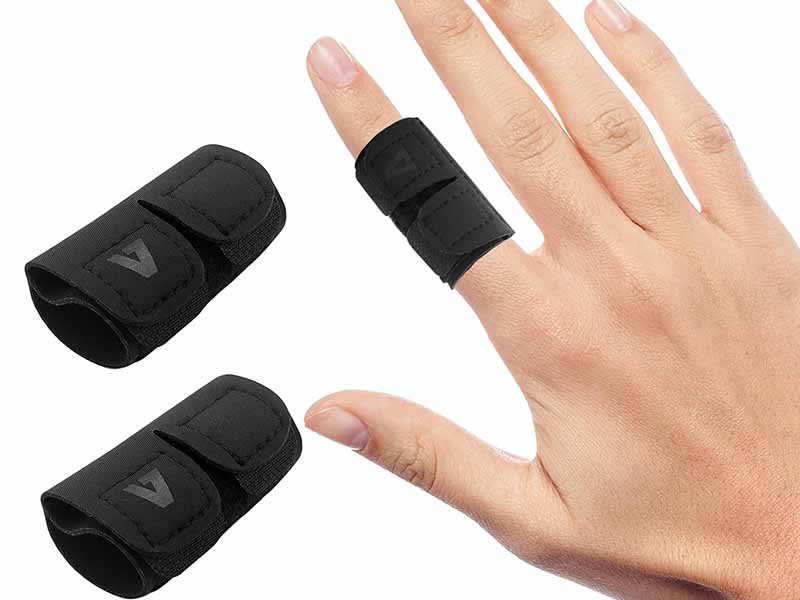
Ever caught yourself pushing through a long typing session or gripping a racket with a sore finger, wishing there was something slim yet supportive to wrap around just that one digit? That’s exactly where a neoprene finger sleeve steps in. Think of it as a mini “sock” for your finger—soft yet strong, compressive but flexible, offering warmth, protection, and gentle support at the joint level. In sports, rehab, or everyday use, finger sleeves have quietly become a go-to accessory when taping feels too stiff or gloves are overkill.
A neoprene finger sleeve is a tubular or partial sheath made of neoprene foam laminated with fabric, designed to deliver light compression, insulation, and joint support to fingers without limiting mobility.
Unlike bulky braces, these sleeves are engineered to hug the finger snugly—stabilizing minor sprains, reducing swelling, and enhancing proprioception (your sense of finger position). In this article, we’ll unpack which types of sleeves exist, how they’re made, which scenarios benefit most, how to choose specs, care tips, and why Szoneier is uniquely positioned to help you custom-manufacture high-performance neoprene finger sleeves for your brand.
Let me share a quick story: A young badminton player came to us complaining about recurring finger jam injuries. She didn’t want a rigid splint that would hamper dexterity. We developed for her a 2 mm neoprene sleeve with reinforced stitching around the PIP joint and a smooth knit facing. She wore it during training, said it warmed and supported her finger without being intrusive—and a month later, she ordered for her whole team. That’s the power of smart design plus proper material engineering. Let’s dive in.
What Is a Neoprene Finger Sleeve and What Does It Do?
A neoprene finger sleeve is a flexible support garment worn over one or more finger joints. It provides compression, thermal warmth, and joint stabilization, while still allowing full flexion and extension. Many designs also enhance tactile grip, reduce irritation, and act as a barrier against impact or friction.
Let’s expand on how this seemingly simple accessory balances multiple demands:
Origins & Context
Finger sleeves are a variant of more general compression or protective sleeves, adapted for the unique anatomy of fingers. They are often used in hand therapy, sports (basketball, volleyball, archery), or by workers whose fingers endure repetitive stress. Even Wikipedia notes that finger sleeves are worn for “pain relief and support and protection for the finger” in both medical and performance contexts.
A classic example is Norco® Neoprene Finger Sleeves, sold for therapeutic use: they offer light compression, warmth, and gentle support without restricting motion.
Functional Roles
When specifying or using neoprene finger sleeves, here are the main roles they fulfill:
- Compression & Swelling Control: Mild compression reduces edema and inflammation following minor trauma or overuse.
- Thermal Heat Retention: Neoprene’s insulating properties help keep finger joints warm, which can reduce stiffness and improve joint fluid mobility.
- Proprioceptive Feedback & Stabilization: The tactile presence of the sleeve gives subtle cues to your brain, helping you avoid overextension or unexpected twists.
- Protection & Friction Barrier: The sleeve mitigates abrasion from repetitive contact (e.g., ball grip, tools) and cushions against minor impacts.
- Grip/Traction Aid: Some sleeves include textured knit or silicone grips to enhance friction, useful for sports or manual tasks.
Design Constraints
Achieving all those roles in one slim accessory is nontrivial. Key design challenges include:
- Material thickness vs. mobility: Too thick and the sleeve feels stiff; too thin and compression is lost.
- Seam placement: Seams over joint creases must flex without chafing or splitting.
- Breathability / moisture management: Fingers sweat; density and knit structure must allow ventilation or moisture escape.
- Adhesion and comfort at edges: The sleeve’s openings must stay flat and not roll—edge finishing is critical.
At Szoneier, we treat finger sleeves as precision components. We match foam density, laminate types, stitch direction, and edge binding to each finger’s biomechanical profile. The result is a product that “disappears” on the finger—yet still works.
How Does Neoprene Material Protect and Support Fingers?
Neoprene offers elasticity, mild compression, thermal insulation, and impact damping. Its closed-cell foam core resists water and retains body heat; the elastic knit facings and adhesive bonding ensure it hugs joint contours. Combined, these features allow a sleeve to shield joints while flexing with movement.
Let’s dissect which material properties make neoprene especially suitable for finger sleeves—and where trade-offs lie.
Elasticity & Recovery
Neoprene foam, when properly crosslinked, can stretch and bounce back reliably. This is essential for sleeves that must slide over joints yet return snugly to resting positions. Compression set (i.e., how much shape is lost after sustained deformation) is an important metric—low compression set (<10%) means the sleeve won’t sag or loosen prematurely.
Thermal Insulation
Closed-cell neoprene traps microbubbles of gas, providing insulation. A finger sleeve warms the local joint area, reducing stiffness and improving circulation. In colder environments, this insulation helps maintain dexterity. Some therapeutic sleeves marketed by Norco use 1.6 mm neoprene for this heat retention factor.
Shock & Vibration Damping
Though thin, neoprene can absorb micro-impacts and vibrations—helpful in precision tools or sports contexts (e.g. tennis serving). It’s not a substitute for rigid protection, but for minor knocks, the cushion helps.
Compression & Support
Mild compression from neoprene fibers can aid joint stability. Unlike rigid bracing, neoprene offers flexible support—enough to deter excessive motion without locking the joint. In hand therapy, snug neoprene sleeves are sometimes used as a lightweight alternative to tape or bulkier braces to support ligaments.
Moisture & Durability
Because most neoprene finger sleeves use closed-cell foam plus knit facings, they don’t soak up sweat or water, which helps maintain compression and hygiene. However, over time repeated flexing, friction, or poor adhesive bonding can degrade the layer interface, causing delamination or seam failure. That’s why quality lamination and finishing are critical.
Performance Balancing & Trade-Offs
Each design has compromise decisions:
- Thickness: 1.5–3 mm is common—thicker material offers better insulation but can feel bulky.
- Density: Lower density = lighter and softer, but more creep; higher density = sturdier but less cushioning.
- Facing knit: A soft jersey side is comfortable on skin, while tougher knit on the outside helps abrasion. Some designs even use stretch-grade Lycra on one side to allow joint flex.
- Adhesive bond strength: Poor bonding leads to peel over time. High-performance sleeves specify peel strength (e.g. ≥ 2 N/cm) and validate via tests.
- Edge design: The open-ended or closed-tip design must have reinforced edges to prevent rolling.
Which Types of Neoprene Finger Sleeves Are Commonly Used?
Common neoprene finger sleeve designs include closed-tip sleeves (ends sealed), open-tip sleeves (finger tip exposed), joint-specific models (with stiffeners or padding at joints), and hybrid sleeves combining brace inserts or grip elements. Each caters to different use cases—from performance sports to rehab and manual work.
Closed-Tip vs. Open-Tip
- Closed-tip sleeves envelop the entire finger—including the tip. They offer full protection and warmth, useful in cold climates or for injury rehab.
- Open-tip sleeves leave the fingertip exposed, allowing tactile feedback, ventilation, and dexterity—ideal for tasks requiring touch sensitivity (typing, gaming, instrument use).
Joint-Specific Models
Some designs incorporate extra padding, mild splints, or reinforcements around particular joint locations (PIP, DIP, or thumb IP). These are useful in sports or medical recovery, where a finger may need extra lateral or rotational restraint.
Hybrid or Modular Sleeves
Some sleeves combine neoprene with additional materials—for instance, silicone grip pads, hook-and-loop straps, or removable splints. This gives modular support or grip functionality while still benefiting from neoprene’s flexibility.
Length / Coverage Options
Sleeves might cover only a portion (e.g. mid-joint span) or extend down to palm or wrist bounds as part of gauntlet-style sleeves. Some designs use adjustable cut-to-length material to serve multiple finger lengths.
Use-Case Matching
- Sports (basketball, volleyball): Often open-tip, mid-length sleeves to support joints while maintaining grip.
- Hand therapy / rehab: Closed-tip or joint-specific models for graded stabilization.
- Manual labor / tool work: Hybrid sleeves with added grip or abrasion panels.
- Musical instruments / gaming: Extremely thin or open-tip sleeves to preserve touch sensitivity.
When sourcing finger sleeves, specifying the design variant is as critical as the foam and knit parameters. At Szoneier, we can custom fabricate any of these styles, offer modular designs, and test prototypes to validate comfort, durability, and user feedback.
How Are Neoprene Finger Sleeves Manufactured?
Neoprene finger sleeves are produced by cutting laminated foam sheets, bonding and stitching edges, finishing opening edges, and applying surface treatments. Key parameters—foam thickness, laminate quality, edge binding, and seam technique—directly influence compression consistency, durability, and comfort.
1. Material Preparation & Lamination
First, you need laminated neoprene sheets tailored for sleeve production: typically 1.5–3 mm thickness, double-faced or single-faced, with knit facings suitable for stretch and comfort. This lamination must be durable (high peel strength) and flexible.
2. Cutting
- Die Cutting: Efficient for high-volume runs of identical sleeve shapes.
- Laser / CNC Cutting: Useful in prototyping or small runs, especially for custom shapes or thicker materials.
- Notch and Alignment Marks: Helpful to align seams and orientation during stitching.
3. Edge Binding & Prepping Openings
The edges where the finger enters/exits must be reinforced to prevent stretch-out or fraying:
- Fold-over binding tape (nylon/spandex blend) is common.
- Overlock stitching edges or applying soft tape to reduce irritation.
- Heat sealing edges (for smoothness and less bulk) is also used in premium products.
4. Stitching / Seam Construction
- Flatlock stitching is favored for flexibility and minimal bulk over joints.
- Blind-stitch or cover-stitch methods may be used at non-joint sections.
- Glue + stitch hybrid: Adhesive applied first, then stitching to reinforce seam.
- Stitch count & thread: Typical industrial standards: 8–12 stitches per cm, high-tenacity polyester thread.
- Seam placement is critical: avoid crossing joint creases as much as possible—or use curved stitches to accommodate bending.
5. Finishing & Inspection
- Edge trimming: Any excess threads or foam protrusions are trimmed.
- Visual inspection: Check for seam puckering, snags, misalignment.
- Stretch / compression test: Random sleeves are tested (e.g. stretched 100 cycles) to inspect elasticity and seam integrity.
- Batch marking: Each product is tagged with batch codes, so potential defects can be traced back to production parameters.
6. Packaging & Pre-Shipment Tests
Before shipping, some manufacturers conduct aging tests (heat, moisture, flex cycles) and dimensional tolerance checks. Items are stuffed, shrink-wrapped or bagged (often with silica desiccant), and boxed with cushion to avoid edge deformation in transit.
At Szoneier, our manufacturing lines are vertically integrated—lamination, cutting, stamping, sewing, finishing all under one roof. This gives tighter control over quality, faster iteration, and better batch consistency. When you order from us, you get products that already passed internal QC.
What Conditions or Sports Benefit Most from Neoprene Finger Sleeves?
Neoprene finger sleeves benefit conditions like joint sprains, tendinitis, arthritis, trigger finger, and mild ligament instability. In sports, they are widely used in basketball, volleyball, table tennis, and archery to support joints, absorb impact, and enhance grip. Their insulation and compression help manage pain and recovery while preserving dexterity.
Medical & Therapeutic Applications
Arthritis / Osteoarthritis: Gentle warmth and compression can reduce stiffness and joint pain in cold settings.
Tendinitis / Tenosynovitis: The slight compression may reduce sheath swelling and provide mild support during movement.
Minor Sprains / Ligament Strain: For Grade I or II finger sprains, these sleeves can stabilize without resorting to full splints.
Post-surgical or Post-cast Rehab: As rigid casts are removed, neoprene sleeves offer transitional support.
Raynaud’s / Cold Sensitivity: The insulating nature helps maintain local warmth—important in cold environments.
Neoprene sleeves (foam-based) are sometimes recommended in clinical settings because they combine warmth and compression in a low-profile format.
Sports & Performance Use Cases
- Basketball / Volleyball: Guarding against jams and hyperextensions. Players often wear sleeves on fingers during games.
- Table Tennis / Pickleball / Badminton: Some players use slim finger sleeves to aid grip control and reduce sweat slippage.
- Archery / Shooting: Throwing fingers or string fingers sometimes wear sleeves to reduce friction and skin irritation.
- Tennis / Racquet Sports: For finger joints that grip racquet handles, sleeves can buffer against vibration.
- Gaming / E-sports: Though thinner, neoprene finger sleeves are being tested to reduce friction and finger abrasion during long gameplay (though more common alternatives exist).
- Occupational / Workshop Tasks: Workers handling tools, machinery, or vibrating equipment sometimes use finger sleeves to cushion repeated micro-impact.
Real-World Examples & Supplier Specs
- Norco Neoprene Finger Sleeves sold in therapy catalogs use 1.6 mm thickness neoprene and permit trimming to length.
- Typical sleeves provide warmth, protection, light compression, and extension support while allowing full finger flexion.
Limitations & Cautions
- Severe Injuries: Finger sleeves are not a substitute for rigid bracing in Grade III ligament tears or fractures.
- Incorrect Compression: Too tight sleeves may restrict blood flow or nerve signals.
- Durability in High-Stress Use: Repeated flexing or poor finishing can lead to seam failure or delamination.
- Skin Sensitivity / Allergies: Some users may react to adhesives or knit facings.
Understanding these benefit and risk profiles helps you design or select sleeves tailored to real user needs—whether for athletes or medical markets. At Szoneier, we can prototype sleeves for your target sport or condition, run flex- and wear-life studies, and optimize for use-case wear patterns.
How Do You Choose the Right Size, Thickness, and Design?
Choose sleeve specs based on finger circumference, desired compression level, material thickness, and feature needs (open-tip, reinforced joint zone, grip texture). Measure at the PIP joint, select compression range (say 5–15 % compression), decide on foam thickness (typically 1.5–3 mm), and then match design features (binding, grip, modulus). Always prototype and test—performance in the lab must match feel on the finger.
Sizing & Compression Logic
- Measurement Point: Measure circumference at the PIP (proximal interphalangeal) joint.
- Compression Range: Optimal compression is often ~5–15 % of circumference reduction. Too tight is painful; too loose is ineffective.
- Size Tolerance: In-between sizes? Choose the larger to avoid cutting circulation—unless the knit/support structure compensates.
- Length Decisions: Do you want full-length coverage, mid-length, or adjustable cut-to-length? Tailor length to use-case (e.g. some users prefer sleeves shorter than knuckles).
Thickness & Foam Density
- Foam Thickness: 1.5 mm, 2 mm, 2.5 mm, 3 mm are common options. Less thickness = lighter and more tactile; more thickness = better warmth and impact cushioning.
- Density Tradeoff: Denser foam resists collapse and creep better but is stiffer. Lower density gives softer feel but may sag over time.
- Compression Set Requirements: Choose foams with low compression set under repeated loading; for example, <10 % after 22h at 70°C is a good benchmark.
Knit / Facing Selection
- Inner-facing knit: Soft jersey or brushed knit to reduce skin friction and improve comfort.
- Outer-facing knit: Durable nylon or polyester that resists abrasion and supports printing or grip textures.
- Stretch direction: The knit’s stretch direction should align with finger movement (circumferential stretch more than longitudinal).
- Add-ons: Grip silicone patterns, zone padding, or thin lamination overlays can be integrated if needed.
Edge Binding & Openings
- Reinforced edges: Use fold-over binding, soft tape, or overlock stitching to prevent opening edges from rolling up.
- Open-tip vs. Closed-tip: Decide early whether the fingertip is covered. Open-tip eases ventilation, closed-tip gives full insulation.
- Transition zones: The boundary between bound edge and main sleeve must be smooth to avoid catching on skin or movement.
Prototype & Testing
- Fit test: Try on multiple hand/finger sizes to ensure comfort across users.
- Cycle test: Flex the sleeve hundred or thousand times, check for loosening or signs of seam failure.
- Compression retention: After wear or washing, measure whether it still exerts intended compression.
- Edge durability: Open and close the sleeve repeatedly to see if edges fray or roll.
Example Spec Table
| Spec Parameter | Suggested Range / Value | Buyer Notes |
|---|---|---|
| Finger PIP Circumference | 4.5 cm – 9.0 cm | Common adult sizes |
| Compression Target | 5 % – 15 % reduction | Measure before / after |
| Foam Thickness | 1.5 – 3.0 mm | Tradeoff between feel & warmth |
| Fabric Knit Stretch Direction | ≥ 50 % circumferential | For joint flex |
| Seam Type | Flatlock / glued-reinforced | Flexibility without bulk |
| Edge Binding Width | 2 – 4 mm | Keeps edge flat |
| Durability Test Cycles | ≥ 5,000 flex cycles | Indicates product life |
In your inquiry to Szoneier, just supply your target finger circumference ranges, desired compression, preferred thickness and design features (open-tip, grip zones, etc.), and we’ll return optimized prototypes with performance data. We’ll help you refine until users can’t tell the sleeve is even there.
Do Neoprene Finger Sleeves Require Special Care or Maintenance?
Care involves gentle washing (cool water, mild soap), air drying flat away from heat, avoiding wringing/twisting, and storing flat or loosely rolled. Keep away from sharp objects, direct sunlight, and strong solvents. With proper care, a well-made neoprene finger sleeve can last many seasons.
Cleaning Guidelines
- Use cool or lukewarm water with mild, pH-neutral soap.
- Avoid bleach, fabric softeners, or harsh detergents—they degrade adhesive bonds.
- Gently rub with a soft cloth or sponge; do not scrub vigorously.
Drying & Dehumidifying
- Air dry flat or draped over a rod—avoid hanging vertically (which stretches edges).
- Keep away from direct sunlight or heaters, which can degrade foam and adhesives.
- Ensure sleeves are fully dry before storage to prevent mold or odor.
Storage Best Practices
- Store flat or loosely rolled; avoid sharp folds or compression from heavy objects.
- Use breathable, cool, dry environments—heat and UV degrade rubber compounds.
- If storing long-term, place inside breathable bags (mesh), not sealed plastics.
Spot Repair & Troubleshooting
- For minor seam peel: use compatible neoprene adhesive and clamp until cured.
- If edge binding begins to roll, re-iron or hand-stitch with matching thread.
- If foam has small abrasions: a light coat of neoprene-safe rubber dressing may restore surface—but test on scrap first.
Life Expectancy & Replacement
The life of a finger sleeve depends on usage frequency, stress levels, and care. High-quality sleeves from expert factories can last hundreds or thousands of cycles. If you notice permanent stretch, seam separation, or delamination—time to replace.
Why Choose Szoneier for Custom Neoprene Finger Sleeves?
You now understand what a neoprene finger sleeve is, how material science supports joint health and performance, the variety of designs, production methods, use cases, sizing logic, and care protocols. But all that theory only matters if your supplier can deliver reliable, high-performance sleeves at scale—and that’s where Szoneier shines.
- 18+ years in neoprene R&D and manufacturing: We’ve perfected foam formulas, lamination techniques, and seam durability across thousands of projects.
- Full custom capability (OEM / ODM / private label): Want 2.2 mm sleeves, open-tip, with silicone grip zones, branded packaging, custom sizes? We can do it—all with low MOQ and fast prototyping.
- Data-backed quality assurance: Every batch comes with labeled technical datasheets (density, compression set, peel strength, cycle tests) so you know exactly what you receive.
- Integrated factory control: From lamination to cutting to stitching and finishing under one roof—which means tighter tolerances, faster iteration, and lower scrap.
- Global supply experience: We already supply many overseas small-to-mid importers and premium brands. We understand freight logistics, packaging needs, and compliance requirements (e.g. REACH, RoHS).
So, if you’re planning to launch or enhance a line of neoprene finger sleeves—whether for sportswear, medical gear, or branded giveaways—Szoneier is ready to partner. Send us your ideal finger circumference, compression preferences, thickness, and features. We’ll help you with prototypes, performance feedback, and pricing—all with confidence.
Let’s make finger sleeves that perform beautifully and last impressively. Contact Szoneier today.
What Can I Do For You?
Here, developing your OEM/ODM private label leather goods collection is no longer a challenge,it’s an excellent opportunity to bring your creative vision to life.