
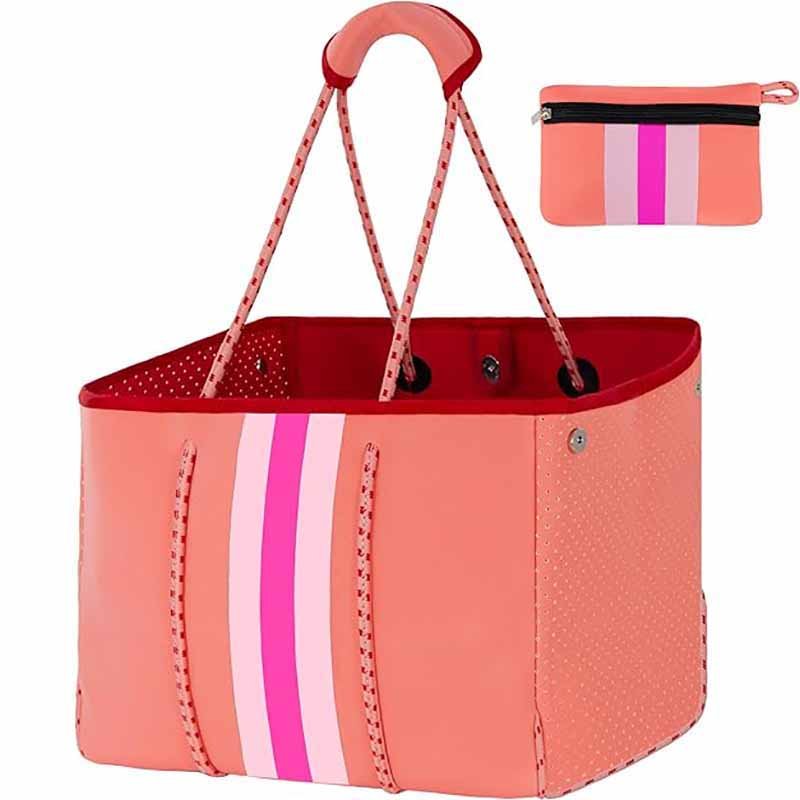
Not long ago, most beach bags were simple fabric totes. They were light, easy to sew, and cheap to produce, but they also had familiar problems: they soaked up water, picked up sand, lost shape quickly, and often looked ordinary after only one season. That is one reason neoprene beach bags have grown so fast in the lifestyle market. They feel softer, look cleaner, carry better, and match the kind of relaxed but polished image that many modern brands want to sell.
For lifestyle brands, a beach bag is not only a storage product. It is part of a visual identity. It appears in campaign photos, resort collections, poolside edits, travel content, and seasonal product launches. That means the bag has to do more than hold towels and sunscreen. It needs to look fresh, feel premium, photograph well, and still handle water, sand, sun, and daily carrying. Neoprene fits that role better than many traditional materials because it combines softness, structure, stretch, and a modern surface feel in one material system.
The neoprene beach bags most often used by lifestyle brands include large open tote bags, zipper tote bags, perforated carryall bags, lightweight shoulder bags, and structured travel-style beach totes. These styles are popular because neoprene is water-resistant, flexible, durable, soft to carry, and easy to customize with colors, rope handles, pouches, perforation patterns, and private label branding. That combination makes neoprene especially attractive for brands that want beach bags to feel both fashionable and functional.
This category is also stronger commercially than many people first assume. A well-developed neoprene beach bag can move beyond the beach and become a multi-scene product for travel, gym, pool, shopping, and weekend use. That wider use matters to brands because it increases product value and extends the selling season. A customer may first buy the bag for summer, but keep using it through the rest of the year. That is where good design starts turning into repeat sales. And once you look closely at the different neoprene beach bag styles on the market, it becomes clear why some brands build entire summer collections around them.
What Are Neoprene Beach Bags?
Neoprene beach bags are beach bags made from neoprene-based laminated material, usually a soft foam core bonded with fabric surfaces on one or both sides. The same material family is widely used in wetsuits, can coolers, protective sleeves, sports supports, and other products that need flexibility, cushioning, and resistance to moisture. When used in beach bags, neoprene gives the product a soft but substantial feel, helping it stay lightweight while still carrying large daily loads.
Compared with ordinary woven bags, neoprene beach bags usually feel more modern, more padded, and more comfortable in the hand. They often keep their shape better than thin fabric totes, yet they are still soft enough to fold, pack, and carry easily. That balance is one of the main reasons lifestyle brands continue choosing neoprene for beach-ready collections.
What makes neoprene beach bags popular?
Neoprene beach bags are popular because the material solves several problems that traditional beach bags often have. A beach bag usually needs to carry bulky items, handle wet conditions, resist wear, and still look attractive. Many fabrics only solve part of that problem. Neoprene solves more of it in one material.
From a product point of view, neoprene offers a strong combination of benefits:
- it feels soft but still has body
- it resists splashes and light moisture better than many woven fabrics
- it is more comfortable to carry when loaded
- it supports modern shapes and clean silhouettes
- it works well with bold colors and cutout details
- it gives the product a more premium feel
That last point is especially important. In retail, texture and hand feel matter a lot. Customers often decide whether a bag feels “cheap” or “worth it” within the first few seconds of touching it. Neoprene usually performs well there because it feels smoother, thicker, and more substantial than ordinary cotton or polyester beach totes.
The comparison below helps explain why the market keeps moving toward neoprene in this category.
| Material | Water Resistance | Softness | Shape Support | Weight | Visual Appeal | Beach Use Practicality |
|---|---|---|---|---|---|---|
| Cotton Canvas | Low | Medium | Low | Medium | Casual | Fair |
| Polyester Fabric | Medium | Low | Low | Light | Basic | Good |
| Mesh Fabric | High | Low | Very low | Very light | Sporty | Good |
| Straw or Woven Paper | Very low | Low | Medium | Light | Fashion-led | Weak in wet use |
| Neoprene | High | High | Medium to high | Light to medium | Modern and premium | Strong |
Another reason neoprene beach bags are popular is that they look better for longer. Canvas bags often wrinkle, stain, or collapse after repeated use. Straw bags can deform. Thin polyester bags may feel too basic for a higher-end lifestyle product. Neoprene bags usually hold a cleaner appearance across more uses, which helps justify a higher retail price.
Why do lifestyle brands choose neoprene beach bags?
Lifestyle brands choose neoprene beach bags because the category fits exactly what those brands are often trying to communicate: relaxed style, easy travel, casual luxury, and practical daily use. The product is not overly technical, but it still has real functional value. It is not too fashion-only, but it still looks elevated enough to support strong branding.
There are several reasons this matters commercially.
First, neoprene beach bags give brands more room to build recognizable design language. A brand can play with:
- perforated body panels
- contrast stitching
- rope handles
- solid-tone or color-block structures
- matching inner pouches
- shaped side panels
- tonal logo printing
- oversized silhouettes
Second, neoprene helps support premium product positioning. This is important for lifestyle brands targeting resort retail, boutique stores, DTC websites, or seasonal capsule collections. The customer is usually not only shopping for function. They are shopping for a feeling: clean design, modern vacation mood, easy luxury, and good everyday usability.
Third, neoprene beach bags can bridge multiple use scenes. A customer may use the same bag for:
- beach days
- pool visits
- spa trips
- gym sessions
- weekend travel
- carry-on packing
- shopping and daily errands
That wider use gives the bag better value in the customer’s mind, and better sales potential for the brand.
The table below shows why many lifestyle brands see neoprene beach bags as commercially stronger than standard beach totes.
| Brand Goal | Why Neoprene Helps |
|---|---|
| Build a premium summer product | Better hand feel and cleaner appearance |
| Differentiate from common fabric totes | More unique material and structure |
| Support higher retail pricing | Stronger perceived value |
| Create recognizable signature styles | Easy to combine shape, color, perforation, and handles |
| Sell beyond peak beach season | Works for travel, gym, pool, shopping |
| Offer customization | Flexible for logo, color, size, and accessory changes |
For brands that care about visuals, merchandising, and repeatability, these points matter a lot more than simple raw material cost.
Are neoprene beach bags good for beach use?
Yes, neoprene beach bags are very suitable for beach use, but the reason is not just that they are “water-resistant.” The real advantage is that neoprene performs well across several conditions that beach products face at the same time.
A beach bag usually has to deal with:
- wet swimwear
- damp towels
- sunscreen leaks
- contact with sand
- repeated lifting with heavy contents
- heat exposure
- folding during transport
- quick clean-up after use
Neoprene handles these conditions better than many ordinary fabrics because it does not behave like a flat woven cloth. Its foam-backed structure gives it flexibility and cushioning, which helps the bag stay comfortable and visually stable even when loaded with bulky items.
Another practical advantage is comfort. Beach bags are often packed with large soft items such as towels, cover-ups, extra clothes, slippers, bottles, and accessories. These loads are not always extremely heavy, but they are bulky and awkward. Neoprene stretches slightly and moves more naturally with the load, which often makes the bag feel easier to carry on the shoulder than stiff woven alternatives.
That said, not every neoprene beach bag is automatically a good beach product. The full design still matters. A poorly designed neoprene bag with weak handles, bad seam reinforcement, or no practical storage will still disappoint. Material alone is not enough. Good beach performance comes from the way the material is engineered into the final bag.
What thickness of neoprene is used in beach bags?
Neoprene thickness is one of the most important product decisions in beach bag development because it directly affects weight, structure, flexibility, cost, and feel. Many customers focus only on appearance, but thickness often determines whether the bag feels soft and floppy, balanced and premium, or heavy and overbuilt.
In beach bags, the most common neoprene thicknesses are 2 mm, 3 mm, and 5 mm. Each serves a different market position.
| Neoprene Thickness | Feel | Structure | Weight | Cost Level | Common Product Direction |
|---|---|---|---|---|---|
| 2 mm | Soft and light | Low to medium | Light | Lower | Smaller casual totes, lighter carry bags |
| 3 mm | Balanced | Medium | Moderate | Medium | Mainstream beach totes, lifestyle carryalls |
| 5 mm | Thick and substantial | High | Heavier | Higher | Larger structured totes, premium statement bags |
2 mm neoprene works best when the brand wants a softer, lighter bag with lower weight and a more flexible body. It can be good for smaller bags or minimalist styles, but it may not hold shape as well under heavier loads.
3 mm neoprene is the most common choice for neoprene beach bags because it gives the best overall balance. It still feels soft, but it has enough body to support a nice silhouette. It handles everyday loads well, photographs nicely, and is easier to price competitively.
5 mm neoprene creates a more structured and substantial bag. It can feel more premium in some designs, especially large carryall shapes, but it also adds weight and may raise freight cost. For some brands, that is worth it. For others, it makes the product less practical for daily use.
At Oneier, neoprene thickness is usually selected according to bag size, target market, final use, and price level rather than chosen as a one-size-fits-all standard. That matters because a large open beach tote for resort retail does not need to be built the same way as a compact zipper tote for active travel use.
How do neoprene beach bags compare with other beach bag categories?
To understand why neoprene has become so popular with lifestyle brands, it helps to compare it more directly with other beach bag types that are also common in the market.
| Bag Type | Main Strength | Main Weakness | Best Market Position |
|---|---|---|---|
| Canvas Beach Bag | Classic, simple, low cost | Absorbs water, collapses, stains more easily | Entry to mid-level casual |
| Straw Beach Bag | Strong seasonal look | Weak durability in wet conditions | Fashion-led summer collections |
| Mesh Beach Bag | Sand can fall out easily | Less polished look, weaker structure | Sport and practical beach use |
| Polyester Tote | Easy to produce, low cost | Often looks basic | Mass market |
| Neoprene Beach Bag | Premium feel, soft structure, better versatility | Higher material cost than simple woven bags | Lifestyle, travel, premium casual |
This comparison shows why neoprene performs especially well for brands that want a stronger balance between function and brand image. It is not always the cheapest choice, but it often creates more product value, more differentiation, and better retail presentation.
Why neoprene beach bags fit private label and OEM development so well
Neoprene beach bags are also attractive from a manufacturing and customization point of view. For private label clients, it is important that a product can be meaningfully customized without becoming too difficult to develop or too expensive to launch. Neoprene works well here because the material and construction allow many visible product changes.
Common custom options include:
- custom bag dimensions
- custom neoprene thickness
- body perforation patterns
- printed or embossed logos
- rope handle colors
- matching zipper pouch add-ons
- lining or no-lining structures
- reinforced base panels
- contrast stitching
- custom packaging
This makes neoprene beach bags a strong category for brands that want their product to feel recognizable rather than generic. A private label beach bag should not look like every other open tote on the market. With neoprene, a brand has more room to build its own product language.
Oneier works with many custom neoprene product categories, including bags, koozies, sports supports, medical braces, wetsuits, and other neoprene items. That broader material experience helps in bag development because neoprene is not just a visual fabric. It needs the right cutting, bonding, stitching, panel structure, and finishing approach to perform well over time. For beach bags, that means the factory’s neoprene experience matters, not only its sewing ability.
Which Neoprene Beach Bags Are Most Popular?
The neoprene beach bag category is not limited to one single design. Lifestyle brands usually build collections that include several silhouettes, each designed for a slightly different usage scenario. Some customers want a large open tote for towels and beach gear, while others prefer a zipper bag that keeps phones and wallets secure. Because neoprene is flexible and strong, manufacturers can produce many shapes without losing durability.
In the lifestyle market today, several neoprene beach bag styles appear repeatedly in successful product lines. These styles have proven their value because they combine large capacity, comfortable carrying, and strong visual appeal. Brands often adjust details such as color combinations, rope handles, perforation patterns, or removable pouches to create their own identity.
Which neoprene beach tote bags sell the most?
Large open neoprene tote bags are currently the most recognized neoprene beach bag style. These bags typically feature wide bodies, soft but structured sides, and thick rope handles that allow the bag to be carried comfortably over the shoulder.
The main reason for their popularity is capacity. Beach trips often require carrying bulky items such as towels, extra clothes, sunscreen, water bottles, sandals, and snacks. A large open tote allows users to place items quickly inside the bag without worrying about strict organization.
The following table shows common design specifications for neoprene beach tote bags.
| Feature | Typical Range |
|---|---|
| Bag width | 45–55 cm |
| Bag height | 30–38 cm |
| Base depth | 20–28 cm |
| Neoprene thickness | 3 mm |
| Carry handles | Cotton rope or neoprene handles |
| Capacity | 20–35 liters |
Large neoprene beach totes also work well for lifestyle brands because they create a strong visual presence. Oversized silhouettes photograph well for marketing campaigns and product listings.
Another advantage is that open totes allow brands to offer removable accessory pouches. Many neoprene beach totes include a small zipper pouch that attaches to the inside of the bag, giving customers a safe place to store phones, keys, or cosmetics.
Which neoprene beach bags have zipper closures?
Zipper neoprene beach bags are another widely used design. Unlike open totes, these bags close completely, helping protect valuables from sand, water splashes, or accidental drops.
For customers who carry electronics, wallets, or sunglasses, zipper closure provides a stronger sense of security. This design is especially popular among travelers who want a beach bag that can also function as a daily carry bag.
Typical zipper neoprene beach bags have the following design features.
| Feature | Typical Specification |
|---|---|
| Bag width | 35–45 cm |
| Bag height | 28–35 cm |
| Base depth | 12–18 cm |
| Closure | Nylon zipper |
| Interior pockets | 1–3 compartments |
| Neoprene thickness | 3–4 mm |
Lifestyle brands often use zipper beach bags for products that target active consumers. For example:
- beach trips
- poolside relaxation
- travel carry bags
- gym visits
- casual shopping
The zipper structure also allows designers to experiment with new shapes such as dome-top silhouettes or curved openings, which can make the bag look more refined compared with simple open totes.
Which neoprene beach bags are lightweight?
Some lifestyle brands intentionally design neoprene beach bags to be extremely lightweight. These products usually use thinner neoprene, simpler structures, and fewer accessories. The goal is to create a bag that can fold easily into luggage or be carried for long distances without feeling heavy.
Lightweight neoprene beach bags are often popular with travelers, especially those who want a bag that can serve as both a beach tote and an everyday carry bag during vacations.
Common features of lightweight neoprene beach bags include:
- thinner neoprene (around 2 mm)
- fewer interior pockets
- simplified handle construction
- minimal hardware
- foldable design
The table below compares the weight of different neoprene bag structures.
| Neoprene Thickness | Average Bag Weight |
|---|---|
| 2 mm neoprene | 300–450 g |
| 3 mm neoprene | 450–700 g |
| 5 mm neoprene | 700–1100 g |
Reducing neoprene thickness helps lower weight, but brands must balance this with durability and shape support. Many lifestyle brands choose 3 mm neoprene because it provides a comfortable balance between strength and portability.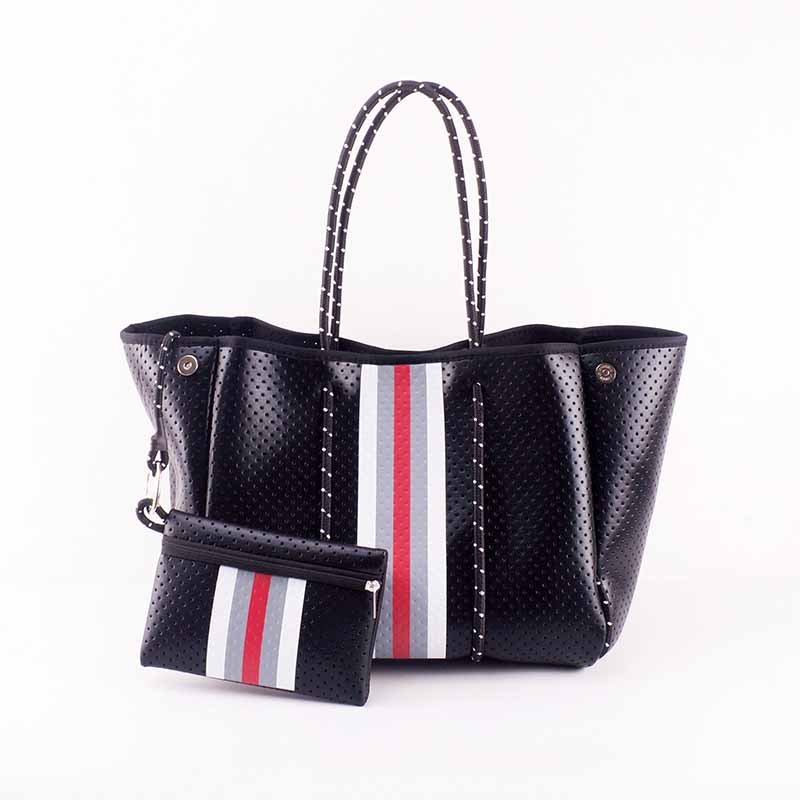
How Do Brands Design Neoprene Beach Bags?
Designing neoprene beach bags requires balancing style, comfort, durability, and production feasibility. Lifestyle brands rarely select materials randomly. Instead, they build products around the type of experience they want customers to associate with the brand.
The design process typically considers several elements at the same time:
- neoprene thickness
- bag capacity
- handle design
- color palette
- internal organization
- structural reinforcement
When these elements work together, the final product feels more intentional and premium.
How do brands choose neoprene thickness for beach bags?
Neoprene thickness affects the feel, structure, and weight of the final product. Brands usually choose thickness based on the bag’s intended function.
The most common neoprene thickness levels used in beach bags include:
| Thickness | Product Characteristics |
|---|---|
| 2 mm | Lightweight, flexible, compact |
| 3 mm | Balanced structure and durability |
| 5 mm | Strong structure for large bags |
For most beach tote bags, 3 mm neoprene is considered the most balanced option. It offers enough stiffness to hold the bag’s shape while remaining flexible enough for comfortable carrying.
Thicker neoprene can make the bag feel more premium, but it also increases weight and production cost. This is why manufacturers often recommend thickness based on the product’s size and market positioning.
How do pockets improve neoprene beach bags?
Internal pockets and removable pouches greatly improve usability. Without pockets, large beach bags can become difficult to organize because smaller items get buried under towels and clothing.
Common pocket designs include:
- detachable zipper pouches
- interior slip pockets
- waterproof compartments
- mesh side pockets
Removable pouches are particularly popular in neoprene beach bags. They allow customers to carry small items separately while still attaching them to the main bag.
The following comparison shows how pocket systems affect user experience.
| Pocket Type | Benefit |
|---|---|
| Interior zipper pocket | Protects valuables |
| Removable pouch | Flexible organization |
| Waterproof pocket | Protects electronics |
| Mesh pocket | Quick access items |
These small design improvements often determine whether customers view the bag as practical or inconvenient.
How do colors shape neoprene beach bags?
Color plays a major role in lifestyle brand product identity. Because neoprene accepts dye well, brands can use bold color combinations, gradient effects, or seasonal palettes to create recognizable product lines.
Many successful neoprene beach bag collections use:
- neutral base colors
- contrast stitching
- bright seasonal accents
- color-block panels
- laser-cut patterns
Color also affects marketing imagery. Bright beach environments pair well with bold bag colors, making neoprene beach bags particularly photogenic in travel and lifestyle campaigns.
For example, lifestyle brands often build collections around seasonal color themes such as:
| Season | Color Direction |
|---|---|
| Spring | Pastels and soft neutrals |
| Summer | Bright coral, turquoise, yellow |
| Autumn | Earth tones and warm neutrals |
| Resort collections | Black, sand, navy, white |
This flexibility makes neoprene beach bags easy to refresh every season without redesigning the entire product.
What Features Make Neoprene Beach Bags Better?
A neoprene beach bag can look attractive in product photos, but real product quality depends on the details of how the bag is designed and constructed. Lifestyle brands that succeed in this category usually pay close attention to features that improve everyday usability rather than focusing only on appearance.
Beach environments are demanding. Bags must carry bulky items, resist moisture and sand, remain comfortable to carry, and still look good after repeated use. When brands evaluate neoprene beach bag designs, they often focus on a combination of structural features, storage features, and comfort-related elements.
What storage features do neoprene beach bags need?
Storage organization is one of the most important practical aspects of beach bag design. Without proper compartments, large bags quickly become cluttered and difficult to use.
Modern neoprene beach bags often include several storage solutions to improve usability:
- detachable zipper pouch for valuables
- internal slip pockets for smaller items
- waterproof compartments for wet swimsuits
- reinforced base panels for heavier loads
- wide opening for easy access
Removable pouches have become particularly popular among lifestyle brands. These pouches allow customers to store small essentials such as phones, keys, sunglasses, and cosmetics separately from larger items.
A typical organization structure may look like this:
| Storage Feature | Purpose |
|---|---|
| Main compartment | Holds towels, clothing, and larger items |
| Removable zipper pouch | Protects valuables |
| Interior slip pocket | Quick access items |
| Reinforced base panel | Supports heavier contents |
This type of layout improves user convenience without adding excessive complexity to the bag design.
What handles work best for neoprene beach bags?
Handle design has a strong influence on both comfort and durability. Beach bags often carry heavy items such as water bottles, wet towels, and beach gear. Poor handle construction can cause strain on the shoulders or lead to premature wear.
Two handle styles are commonly used for neoprene beach bags.
Cotton rope handles
These thick braided handles distribute weight comfortably across the shoulder. Rope handles are popular because they also contribute to the bag’s aesthetic appeal.
Neoprene padded handles
Handles made from the same neoprene material as the bag create a softer carrying experience and maintain a clean visual design.
The table below compares common handle types.
| Handle Type | Comfort | Durability | Style |
|---|---|---|---|
| Cotton rope handle | High | Excellent | Casual beach style |
| Neoprene padded handle | High | Good | Clean modern look |
| Webbing strap | Medium | Very good | Sport style |
Lifestyle brands often select rope handles for beach-focused collections because they enhance the relaxed coastal aesthetic.
What sizes are best for neoprene beach bags?
The best size for a neoprene beach bag depends on the intended use scenario. Large family beach trips require bigger capacity, while smaller bags work better for casual poolside visits.
Most neoprene beach bags fall into three common size categories.
| Bag Size | Width | Typical Use |
|---|---|---|
| Small beach tote | 35–40 cm | Light travel or pool use |
| Medium beach tote | 40–50 cm | Everyday beach trips |
| Large beach tote | 50–60 cm | Family beach outings |
Medium-sized bags are usually the most commercially successful because they offer a balance between capacity and portability.
Large bags can hold more items but may become heavy when fully loaded. Smaller bags are easier to carry but may not fit large beach towels.
For many lifestyle brands, designing one medium bag and one oversized bag in the same collection allows them to reach a wider customer base.
How Are Custom Neoprene Beach Bags Made?
Behind every successful neoprene beach bag product is a manufacturing process that balances design creativity with production practicality. Lifestyle brands often develop custom neoprene beach bags through OEM or private label manufacturing partnerships.
Custom production allows brands to create products that reflect their identity rather than selling generic designs.
How do factories develop neoprene beach bags?
Neoprene bag production involves several stages, starting with design development and ending with quality inspection before shipment.
The typical manufacturing workflow includes:
- concept design and specification confirmation
- neoprene material selection and thickness decision
- pattern development and sample production
- logo printing or embossing preparation
- sewing and assembly
- quality inspection and packaging
During sampling, manufacturers test factors such as:
- handle strength
- seam durability
- shape stability
- zipper performance
- color accuracy
Sampling allows brands to adjust the design before mass production begins.
How do OEM services support neoprene beach bags?
OEM manufacturing allows brands to produce neoprene beach bags under their own labels while relying on experienced factories for production expertise.
Typical OEM customization options include:
- custom bag size
- custom neoprene thickness
- logo printing or embossing
- color matching
- handle material selection
- interior pocket design
- packaging customization
OEM manufacturing is particularly valuable for growing lifestyle brands because it allows them to launch products without building their own factories.
Brands can focus on product design, marketing, and customer experience while the manufacturing partner manages production efficiency and quality control.
How does Oneier produce neoprene beach bags?
Oneier has more than 18 years of experience in neoprene material development and product manufacturing, supporting clients across multiple categories including bags, koozies, sports supports, medical braces, wetsuits, and lifestyle accessories.
When producing neoprene beach bags, Oneier focuses on three key areas:
- material quality
- structural durability
- customization flexibility
The production process includes strict material inspection and testing to ensure the neoprene maintains consistent thickness, elasticity, and color stability.
Oneier’s neoprene product capabilities include:
| Product Category | Examples |
|---|---|
| Neoprene bags | Beach bags, tote bags, travel bags |
| Beverage accessories | Koozies and bottle holders |
| Sports protection | Knee supports, elbow supports |
| Medical braces | Rehabilitation supports |
| Water sports products | Wetsuits and neoprene gear |
For beach bag projects specifically, Oneier provides services such as:
- free design assistance
- rapid prototype sampling
- low minimum order quantities
- private label production
- fast manufacturing lead times
These services help lifestyle brands move quickly from concept to retail-ready products.
Final Thoughts
Neoprene beach bags have become a strong product category for lifestyle brands because they combine practicality, comfort, and modern aesthetics. The material’s flexibility, water resistance, and premium feel make it well suited for beach environments while still allowing creative design variations.
Successful neoprene beach bag products usually balance several factors: appropriate thickness, comfortable handle design, practical storage features, and visually distinctive styling. When these elements come together, the result is a product that performs well in real use and stands out in the marketplace.
For brands planning to launch or expand a beach bag collection, working with an experienced neoprene manufacturer can simplify the development process and improve product quality.
Oneier specializes in custom neoprene product manufacturing, offering OEM and private label services for international brands. With more than 18 years of neoprene material expertise, the company supports clients through design development, sampling, production, and quality control.
If you are planning to develop custom neoprene beach bags, travel totes, or lifestyle accessories, the Oneier team is ready to help.
You are welcome to contact Oneier to discuss your project, request samples, and receive a quotation for customized neoprene beach bag production.