
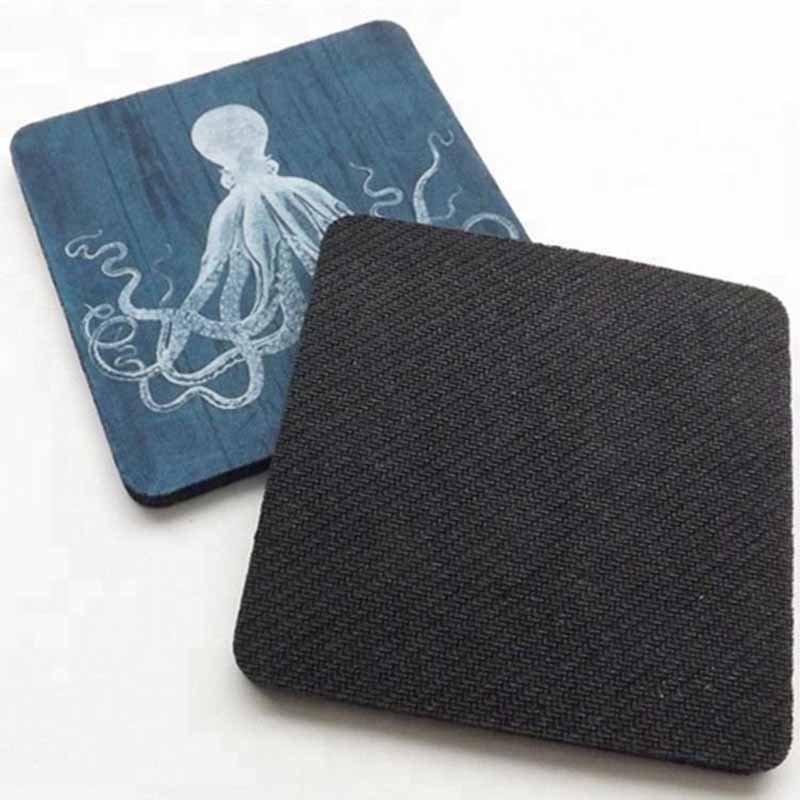
A coaster looks like a small product, but in real business use, it can do much more than protect a table. For many brands, a neoprene coaster is part of the packaging experience, part of the gifting strategy, part of event exposure, and sometimes even part of long-term brand memory. A well-made coaster stays on desks, coffee tables, bars, hotel counters, tasting rooms, and meeting tables for months or years. That means a low-cost item can keep showing a logo again and again in daily use. This is exactly why more importers, promotional product companies, gift brands, beverage brands, and private label sellers are paying closer attention to innovative neoprene coaster designs.
Innovative neoprene coaster designs are not just “printed coasters with a logo.” They are coaster products developed with better material structure, better printing results, better shape design, better edge finishing, and more useful functions. A strong design can improve grip, absorb condensation, reduce sliding, increase logo visibility, and make the product feel more premium in the hand. That matters because today’s customers compare products fast. A generic coaster is easy to ignore. A smart coaster design is easier to remember, easier to reuse, and easier to associate with a brand.
The real value is simple: innovative neoprene coaster designs combine durability, water resistance, comfort, vivid printing, and custom branding into one small product that delivers both practical use and marketing value. When the material, thickness, shape, print method, and finishing are chosen correctly, neoprene coasters can look better, last longer, and create stronger brand impact than many standard coaster options.
Think about two coffee brands at the same trade show. One gives away a plain paper coaster that is thrown away after one drink. The other offers a custom neoprene coaster with a sharp logo, rich color, clean stitching, and a shape that matches its cup lid design. Weeks later, which one is still sitting on a customer’s desk? That is where product detail starts turning into brand value.
What Are Innovative Neoprene Coaster Designs?
Innovative neoprene coaster designs are custom coaster solutions made with neoprene material and upgraded through thoughtful shape, printing, thickness, backing, edge finishing, and branding details. They are designed not only to protect surfaces, but also to improve appearance, user experience, and long-term brand exposure.
What is neoprene in coaster designs?
Neoprene is one of the most practical materials for coaster development because it solves several common product problems at the same time. A good coaster needs to handle water, reduce slipping, feel comfortable, print clearly, and hold its shape after repeated use. Many traditional materials only solve one or two of these needs. Neoprene solves more of them together.
In coaster production, neoprene usually refers to a foam-based rubber sheet laminated with fabric on one or both sides. For printed coasters, polyester fabric lamination is especially common because it gives a smooth surface for color-rich printing. The foam core helps the coaster stay soft, slightly cushioned, and resistant to moisture penetration. This is why neoprene has been widely used in products such as wetsuits, can coolers, sports supports, laptop sleeves, and drink accessories.
For coaster applications, customers usually focus on these practical material benefits:
- Water resistance helps prevent liquid from quickly passing through the coaster
- Softness makes the product feel more premium than hard paper or thin cardboard
- Flexibility reduces cracking and edge breakage during repeated use
- Surface stability supports vivid logo printing and all-over patterns
- Cushioning reduces noise when cups or mugs are placed on a hard table
- Reusability makes the product suitable for gifting, resale, and long-term brand exposure
From a sourcing perspective, the material also supports a wide range of customization routes. Oneier can develop neoprene coaster products in different thicknesses, shapes, surface finishes, and print styles, which makes the product suitable for promotion, retail, event use, hospitality, and private label packaging projects.
A simple comparison helps explain why neoprene remains attractive to many product developers:
| Material Type | Soft Touch | Water Resistance | Print Quality | Reusability | Custom Shape Flexibility |
|---|---|---|---|---|---|
| Neoprene | High | High | High | High | High |
| Cork | Medium | Medium | Medium | Medium | Medium |
| Paperboard | Low | Low | Medium | Low | Medium |
| Silicone | Medium | High | Medium | High | Medium |
| PVC Sheet | Low | High | Medium | Medium | Medium |
For customers who care about both appearance and use performance, neoprene gives a more balanced result than many common coaster materials.
Why are innovative neoprene coaster designs popular?
The popularity of innovative neoprene coaster designs is not accidental. It comes from a very practical market shift: customers want small products to do more. They want them to look better, last longer, feel more premium, and carry stronger branding. At the same time, distributors and brand owners want products that are easy to customize, easy to reorder, and suitable for a wide range of channels.
This is where neoprene coasters perform very well. They are small and affordable enough for promotional campaigns, but they can also be developed with enough detail to fit premium retail and gift packaging. That flexibility makes them attractive to many business types.
Common customer groups that often choose custom neoprene coaster designs include:
- Beverage brands
- Coffee shops and cafés
- Breweries and wineries
- Hotel and resort gift shops
- Promotional product importers
- E-commerce private label sellers
- Event organizers
- Corporate gifting companies
- Lifestyle accessory brands
- Home and kitchen accessory brands
There are several reasons these customers keep coming back to neoprene coasters.
First, branding effect is strong. A coaster sits directly under the cup or mug, which means the logo is often close to the user’s hand and line of sight. If the coaster is attractive enough, it stays visible in everyday environments for a long time.
Second, the product is easy to differentiate. With the right factory, a coaster is not limited to a round shape with a simple print. It can be square, oval, scalloped, die-cut, layered, embossed, stitched, or made in a theme-driven silhouette.
Third, the cost-to-exposure ratio is good. In many custom merchandise programs, a small coaster costs much less than a larger textile or hard-goods item, but it can still create repeated brand impressions over time.
Fourth, it works across multiple sales models. A neoprene coaster can be:
- a low-MOQ custom item for online sellers
- a free giveaway in drink promotions
- a gift-with-purchase item
- a bar or café branding accessory
- a retail add-on product
- part of a seasonal boxed set
The numbers also help explain the appeal. In general sourcing practice, customers often evaluate coaster products through five decision points: unit cost, print effect, durability, customization flexibility, and reorder consistency. Neoprene usually scores well across all five.
| Key Factor | Why Customers Care | Neoprene Performance |
|---|---|---|
| Unit Cost | Must fit promotion or resale margin | Competitive in bulk |
| Print Result | Needs to show logo and artwork clearly | Strong, especially with sublimation |
| Durability | Product should not fail after limited use | Strong for repeated daily use |
| Customization | Helps product stand out in the market | High flexibility |
| Reorder Consistency | Important for brand programs and ongoing SKUs | Strong with controlled factory production |
For overseas customers working with Chinese manufacturers, service also matters. Oneier’s model is attractive to many small and mid-sized importers because it combines free design support, low MOQ customization, rapid sampling, free samples in some project stages, and short lead times. That reduces development pressure for customers who want to test a new coaster series without committing to very large opening quantities.
What makes neoprene coaster designs unique?
What makes neoprene coaster designs unique is not just the material itself. The real difference comes from how the product can be developed. Many coaster products in the market still look generic because the design process stops too early. A logo is added, a standard shape is selected, and production begins. That approach may be fast, but it rarely creates a memorable product. Innovative neoprene coaster designs go further. They improve the product at the structure level, at the visual level, and at the user-experience level.
A strong neoprene coaster design often starts with a clear product purpose. Is the coaster meant for daily café use? A corporate giveaway? A premium retail bundle? A seasonal drink launch? A hotel room accessory? Once the target use is clear, the factory can adjust the details that matter most.
The most important design elements usually include:
Shape design
Round is common, but not always best. Square, rounded-square, hexagon, wave edge, cup-outline, bottle-outline, and logo-shaped coasters can create a much stronger visual identity.
Thickness selection
A 2 mm coaster may feel lighter and cost less, while a 3 to 5 mm coaster often feels more premium and more stable on the table.
Printing approach
Full-color sublimation works well for vivid artwork, gradients, and brand patterns. Screen printing may be useful for simpler, bold logo layouts. Heat transfer can support certain customized effects.
Edge finishing
Smooth die-cut edges, stitched edges, and wrapped edges can change both appearance and durability.
Surface feel
A soft fabric top gives a comfortable touch. Some customers prefer cleaner, sharper print surfaces, while others want more textured visual character.
Backing behavior
Anti-slip performance is important when the coaster is used on polished tables, glass surfaces, or bar counters.
When these details are combined correctly, the product becomes more than a drink accessory. It becomes a mini brand carrier with better daily-use value.
The chart below shows how innovation usually appears in real coaster development:
| Design Area | Standard Approach | More Innovative Approach |
|---|---|---|
| Shape | Basic round | Logo outline, theme shape, geometric cut |
| One-color logo | Full-color artwork, patterns, gradients | |
| Thickness | Single thickness | Different thickness for different channels |
| Edges | Basic cut edge | Fine cut, stitched edge, cleaner finish |
| Use Function | Surface protection only | Gift item, bundle item, collectible item |
| Packaging | Loose packed | Branded set, sleeve, header card, gift box |
Customers also care about risk. A beautiful product is not enough if mass production becomes unstable. This is why factory capability matters. Oneier’s experience in neoprene material development and manufacturing is important here because coaster quality is influenced by several production stages, including sheet selection, lamination stability, print control, die cutting precision, edge cleanliness, and packing consistency. If any of these steps are weak, the final product may show uneven print color, rough edges, surface bubbling, poor bonding, or shape inconsistency.
That is why serious customers often ask deeper questions before ordering:
- Will the color stay consistent between sample and bulk?
- Can the logo remain sharp on textured neoprene?
- How clean are the die-cut edges?
- What thickness feels best for the intended market?
- Is the coaster better with stitched edges or cut edges?
- Can the factory support small trial orders and later scale-up?
These questions are exactly what separate an ordinary coaster project from a product that is easier to sell, easier to reorder, and easier to position at a higher value.
Practical Performance Data Customers Often Care About
For many sourcing teams, design is only one part of the decision. The other part is performance. Below is a practical view of the product characteristics customers often evaluate before moving from sample stage to production stage.
| Performance Area | What Customers Usually Expect |
|---|---|
| Condensation Handling | Surface should manage normal drink moisture without fast soaking through |
| Shape Stability | Coaster should keep shape during daily use and packing |
| Print Clarity | Logo lines and colors should remain clear and attractive |
| Table Grip | Coaster should reduce unnecessary sliding on smooth surfaces |
| Reusability | Product should remain usable after repeated handling |
| Edge Quality | Edges should look clean and feel finished, not rough or frayed |
| Branding Consistency | Bulk goods should match approved sample closely |
| Packaging Fit | Product should suit retail, gift, or promotional packaging plans |
For brand owners, importers, and distributors, this level of detail matters because a coaster is often judged fast. It is touched, seen, stacked, packed, gifted, photographed, and compared. A weak product feels cheap immediately. A well-developed product feels trustworthy immediately.
Why This Product Category Deserves More Attention
Many customers initially see coasters as an accessory item, not a core product. But in practice, accessories often play an outsized role in perceived brand quality. Small items are where customers notice finishing, color discipline, logo sharpness, texture, and packaging care. If a company can make a small item look thoughtful, it often creates more confidence in the rest of the brand line.
This is why innovative neoprene coaster designs deserve more attention than they usually get. They are low-risk compared with many large product programs, but they still offer meaningful room for differentiation. For importers, they are easier to test than large textile items. For private label sellers, they are easier to bundle and cross-sell. For beverage and hospitality brands, they are easy to integrate into marketing. For gift brands, they offer a compact but useful custom product with repeat-use value.
For customers planning a custom project, the most important first step is not just asking for a quotation. It is defining the actual product goal clearly:
- Do you want a coaster that feels promotional or premium?
- Do you want low opening MOQ or higher-end finishing?
- Do you need strong retail presentation or fast event delivery?
- Do you want a simple logo item or a design-led product with story value?
Once those answers are clear, a factory like Oneier can help turn the idea into a more precise custom solution.
If you are developing a custom neoprene coaster line for your brand, event, retail program, or promotional campaign, Oneier can help you move from concept to sample to bulk production with flexible customization, low MOQ support, free design assistance, and reliable manufacturing experience in neoprene products.
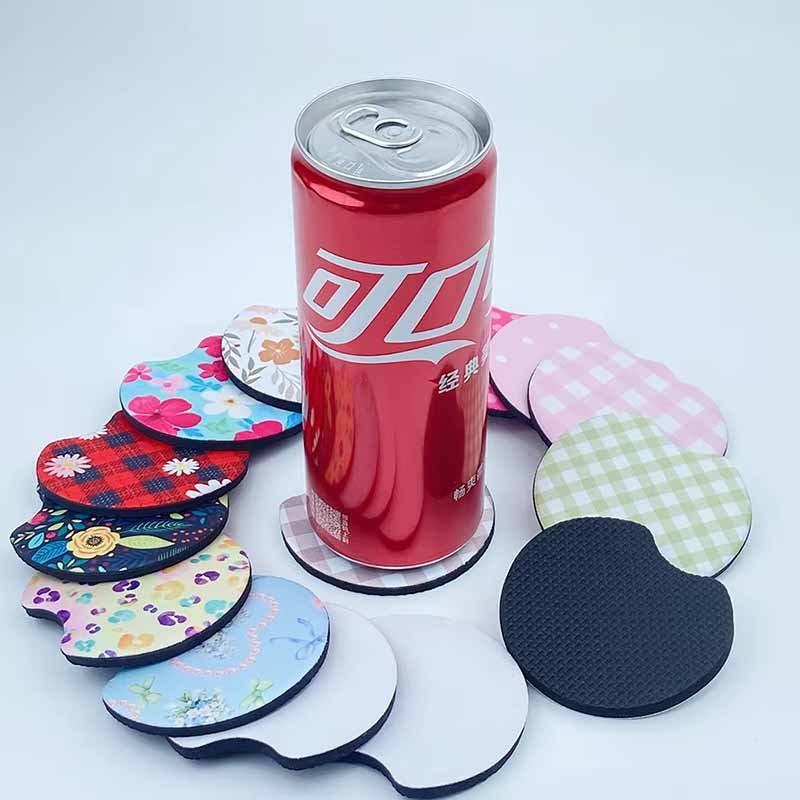
Which Innovative Neoprene Coaster Designs Stand Out?
Innovative neoprene coaster designs that stand out are those that combine visual uniqueness, functional improvement, and clear brand identity. The most successful designs are not always the most complex, but they are intentional—every detail serves a purpose, whether it is improving grip, enhancing logo visibility, or creating a memorable user experience.
Which shapes define neoprene coaster designs?
Coaster shape is often the first thing a customer notices. It directly affects both visual impact and usability. While round coasters are still widely used, they are no longer the default choice for brands that want to stand out.
Today, more customers are choosing shapes that reflect:
- Brand identity
- Product theme
- Usage scenario
Common and effective shape options include:
- Round: classic, cost-efficient, easy stacking
- Square with rounded corners: modern, clean look
- Hexagon: geometric, visually distinctive
- Custom die-cut shapes: logo outlines, product silhouettes
- Wave or scalloped edges: adds softness and uniqueness
- Oversized coasters: more surface area, stronger presence
From a production perspective, custom die-cut shapes require more precise tooling, but they create significantly higher perceived value.
Here is a comparison of how shape impacts product performance:
| Shape Type | Visual Impact | Production Cost | Branding Strength | Stackability |
|---|---|---|---|---|
| Round | Medium | Low | Medium | High |
| Square | Medium | Low | Medium | High |
| Hexagon | High | Medium | High | Medium |
| Custom Die-Cut | Very High | Medium–High | Very High | Low–Medium |
For brands targeting retail or premium gifting, custom shapes often deliver better results because they create immediate recognition.
Which prints enhance neoprene coaster designs?
Printing is where neoprene coasters gain their strongest competitive advantage. Compared to cork or silicone, neoprene supports high-resolution, full-color printing, which allows brands to fully express their visual identity.
The most widely used printing methods include:
- Sublimation printing
- Best for full-color artwork
- Smooth gradients and photographic images
- No cracking or peeling over time
- Screen printing
- Suitable for simple logos
- Strong color blocks
- Cost-effective for large runs
- Heat transfer printing
- Flexible for customized designs
- Good for small batch production
Among these, sublimation printing is the most popular for custom coaster projects because it integrates the ink into the fabric layer, resulting in:
- Long-lasting color
- High detail resolution
- Smooth surface finish
Customers often evaluate printing quality based on:
- Color accuracy (Pantone matching)
- Edge sharpness
- Fade resistance
- Consistency across bulk orders
Here is a simplified comparison:
| Printing Method | Color Complexity | Durability | MOQ Flexibility | Cost Level |
|---|---|---|---|---|
| Sublimation | High | High | High | Medium |
| Screen Printing | Medium | High | Medium | Low |
| Heat Transfer | Medium–High | Medium | High | Medium |
For most branding-focused projects, sublimation printing provides the best balance between visual quality and long-term performance.
Are multifunctional neoprene coaster designs trending?
Yes, multifunctional designs are becoming increasingly important, especially in markets where customers expect more value from each product.
Instead of serving only one purpose, innovative neoprene coasters are now designed to:
- Increase usability
- Extend product lifespan
- Enhance perceived value
Some popular multifunctional features include:
Coaster + jar opener
Integrated rubber grip layer allows users to open bottles or jars
Coaster + mini mouse pad
Smooth surface supports light desktop use
Foldable or flexible coasters
Easier to carry and pack for travel or events
Double-sided designs
Two different graphics or dual branding opportunities
Magnetic backing (for specific uses)
Allows attachment to metal surfaces
From a business perspective, multifunctional products offer clear advantages:
- Higher perceived value without major cost increase
- More use scenarios → longer product life
- Better customer retention and brand exposure
Here is how multifunctionality impacts value:
| Feature Type | Added Cost | User Value | Branding Exposure |
|---|---|---|---|
| Standard Coaster | Base | Medium | Medium |
| Dual-Sided Design | Low | Medium–High | High |
| Jar Opener Function | Medium | High | High |
| Multi-use Surface | Medium | High | High |
For importers and private label sellers, multifunctional designs are especially useful because they help products stand out in crowded marketplaces like Amazon or retail shelves.
How Do Innovative Neoprene Coaster Designs Help Branding?
Innovative neoprene coaster designs help branding by turning a simple product into a long-term visual touchpoint. Every time a customer uses the coaster, the brand is seen again. This repeated exposure builds familiarity, which is one of the most important factors in brand recognition.
How to add logos to neoprene coaster designs?
Adding a logo is not just about placing it in the center. A well-designed logo application considers:
- Placement
- Size
- Contrast
- Interaction with background
Common logo placement strategies include:
- Center-focused logo (classic and direct)
- Corner placement (minimalist style)
- Full-surface pattern with repeated logo
- Edge branding (subtle but premium)
For best results, designers should consider:
- Minimum line thickness for clear printing
- Color contrast for readability
- Safe margins to avoid edge cutting issues
Factories like Oneier can assist with design optimization to ensure the logo performs well in mass production.
How colors improve neoprene coaster designs?
Color plays a major role in how a coaster is perceived. It influences:
- Brand recognition
- Product attractiveness
- Emotional response
Strong color strategies include:
- Matching brand Pantone colors
- Using high-contrast combinations for readability
- Applying gradient or pattern backgrounds for visual depth
For example:
- Dark background + bright logo → strong contrast
- Full-color artwork → lifestyle or creative branding
- Minimalist black/white → premium positioning
Consistency is also critical. Color variation between batches can affect brand perception, so reliable color control during production is essential.
Do custom neoprene coaster designs boost engagement?
Yes, custom designs significantly improve engagement because they:
- Encourage repeated use
- Create visual interest
- Increase emotional connection with the product
A well-designed coaster can:
- Stay on a desk for months
- Be used in social settings (bars, cafés, offices)
- Appear in photos or social media posts
This leads to organic brand exposure, which is difficult to achieve with disposable products.
From a marketing perspective, engagement can be measured by:
- Product retention time
- Frequency of use
- Visibility in user environments
Compared to disposable coasters, reusable neoprene coasters often deliver 3–5 times longer exposure duration, making them a smarter investment for branding.
How Are Innovative Neoprene Coaster Designs Made?
Innovative neoprene coaster designs are made through a combination of material selection, printing technology, precision cutting, and strict quality control. Each step directly affects the final product’s appearance, durability, and consistency—especially in bulk production.
How is neoprene printed in coaster designs?
Printing is one of the most critical stages because it determines how your brand is presented to the end user. For neoprene coasters, the most reliable method for high-quality results is sublimation printing.
In this process:
- Designs are first printed onto transfer paper
- Heat and pressure transfer the ink into the polyester fabric layer
- The ink becomes part of the material, not just a surface layer
This creates several advantages:
- Colors remain vibrant even after long-term use
- No cracking, peeling, or fading under normal conditions
- High-resolution detail allows complex artwork and gradients
For simpler designs, screen printing is sometimes used, especially when:
- The artwork contains 1–2 solid colors
- Large quantities are required
- Cost needs to be optimized
From a customer perspective, print quality is usually judged by:
| Quality Factor | What to Check |
|---|---|
| Color Accuracy | Matches Pantone or brand color |
| Edge Sharpness | Clean lines, no bleeding |
| Consistency | Same result across bulk |
| Surface Finish | Smooth, no uneven texture |
Oneier typically supports Pantone color matching and pre-production sampling, ensuring the final mass production aligns with approved artwork.
What thickness suits neoprene coaster designs?
Thickness is a key detail that directly affects feel, durability, and cost. Choosing the right thickness depends on the product positioning and target market.
Common thickness options:
- 2 mm
- Lightweight
- Cost-effective
- Suitable for promotional giveaways
- 3 mm
- Balanced feel and durability
- Most commonly used
- Suitable for both retail and branding
- 4–5 mm
- Thicker, more premium feel
- Better grip and cushioning
- Suitable for high-end or gift sets
Here’s a practical comparison:
| Thickness | Feel | Durability | Cost Level | Best Use |
|---|---|---|---|---|
| 2 mm | Light | Medium | Low | Promotions |
| 3 mm | Balanced | High | Medium | General retail |
| 4–5 mm | Premium | Very High | Medium–High | Gifts / Premium |
From experience, many overseas customers start with 3 mm for initial orders, then adjust thickness based on market feedback.
How to ensure quality in neoprene coaster designs?
Quality control is where many coaster projects succeed or fail. Even small defects can affect the overall impression, especially for branded products.
A reliable factory follows structured quality checkpoints:
1. Material Inspection
- Check neoprene density and flexibility
- Ensure lamination is stable (no bubbling or separation)
2. Printing Control
- Verify color accuracy before bulk production
- Conduct sample approval before mass production
3. Cutting Precision
- Ensure consistent shape and size
- Avoid rough or uneven edges
4. Final Inspection
- Check surface cleanliness
- Confirm logo clarity
- Inspect packaging consistency
Common issues without proper control include:
- Color deviation between batches
- Uneven cutting edges
- Surface defects (wrinkles, bubbles)
- Weak bonding between layers
Oneier addresses these risks with:
- 18+ years of neoprene product experience
- Dedicated QC teams
- Pre-production samples
- Bulk production monitoring
For B2B customers, this level of control is essential to maintain brand reputation and reorder consistency.
What Makes Innovative Neoprene Coaster Designs Better?
Innovative neoprene coaster designs are better because they are purpose-driven, user-focused, and brand-oriented. They are not just designed to exist—they are designed to perform.
What features improve neoprene coaster designs?
Several features directly improve performance and user experience:
Anti-slip backing
Prevents movement on smooth surfaces
High-density foam core
Improves durability and shape retention
Clean edge finishing
Enhances both appearance and lifespan
Water absorption balance
Holds condensation without leaking through
Heat resistance
Suitable for hot beverages
These features may seem small, but together they create a noticeably better product.
How to balance style in neoprene coaster designs?
Balancing style and function is one of the biggest challenges in product development. A design that looks good but performs poorly will not last in the market.
Effective balance comes from:
- Matching design complexity with printing capability
- Choosing colors that remain stable in production
- Avoiding overly thin details that may blur during printing
- Selecting shapes that are both unique and practical
For example:
- A highly detailed logo may need simplification
- A complex shape may need edge reinforcement
- A bright color scheme may need contrast adjustment
Experienced manufacturers like Oneier often help optimize designs to ensure they are production-ready without losing visual impact.
Which markets prefer neoprene coaster designs?
Neoprene coaster demand is growing across multiple industries and regions. Different markets have slightly different preferences.
Key market segments include:
- North America
- Strong demand for promotional and branded coasters
- Preference for bold logos and multifunctional designs
- Europe
- Focus on minimalism and eco-conscious materials
- Clean design, subtle branding
- Australia
- High demand for beverage-related accessories
- Outdoor and lifestyle-focused designs
- E-commerce (Global)
- Trend-driven designs
- Emphasis on uniqueness and visual appeal
Here’s a simplified overview:
| Market | Design Preference | Key Focus |
|---|---|---|
| USA | Bold, branded | Marketing impact |
| Europe | Minimalist | Aesthetics |
| Australia | Functional | Outdoor use |
| Online Retail | Creative | Differentiation |
Understanding these preferences helps customers develop products that align with their target audience.
Start Your Custom Neoprene Coaster Project with Oneier
If you are planning to develop innovative neoprene coaster designs, choosing the right manufacturing partner makes a major difference.
Whether you are:
- Launching a new product line
- Expanding your promotional product range
- Building a private label brand
- Supplying retail or e-commerce channels
Oneier can help turn your concept into a market-ready, high-quality product.
Next step is simple:
Send your logo, design idea, or reference images, and Oneier will help you develop a custom neoprene coaster solution tailored to your market.