
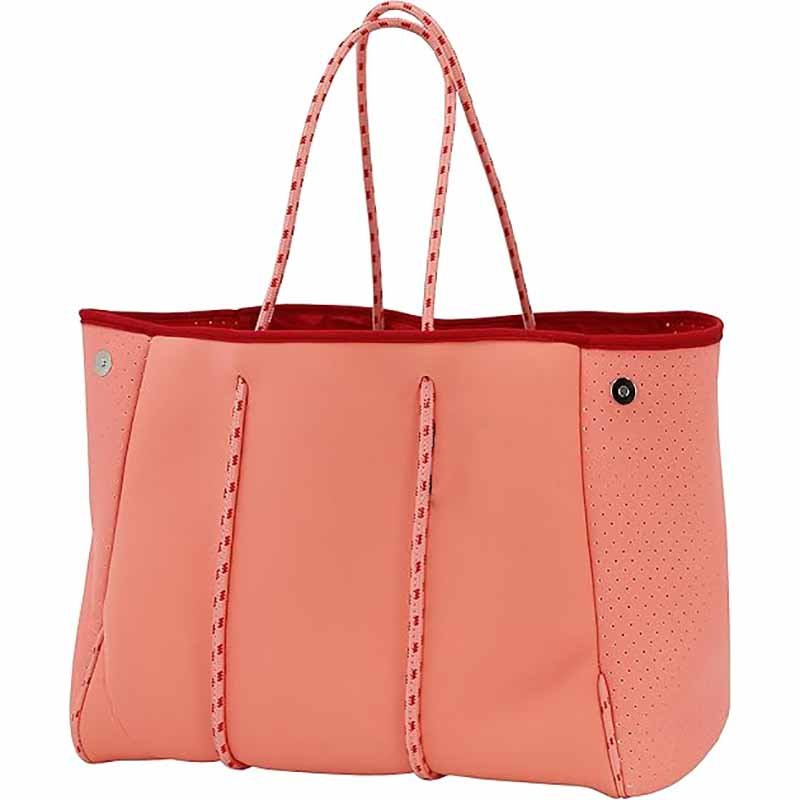
A beach tote is one of those products that seems easy to make until it is actually used the way real customers use it. A good-looking bag on a studio table may perform very differently after being filled with wet towels, sunscreen bottles, beachwear, water cups, flip-flops, snacks, and children’s items for an entire summer. That is why neoprene beach totes have become increasingly popular. They offer a rare combination of softness, shape, water resistance, and modern appearance that ordinary cotton or lightweight polyester bags often cannot match.
Still, not every neoprene beach tote performs well. Some bags look thick but feel heavy and awkward. Some feel soft at first, then stretch too much after repeated use. Some handles begin pulling away from the body after the bag carries only a few heavy loads. In most cases, the problem is not the style idea. The problem is material choice, thickness control, handle structure, seam construction, and lamination quality.
A high-quality neoprene beach tote is manufactured by selecting the right neoprene thickness, matching it with suitable laminated fabric, cutting panels precisely, reinforcing the handle and bottom stress areas, and sewing the bag with stable construction methods. Good manufacturing improves shape retention, carrying comfort, resistance to water exposure, and long-term durability in beach, poolside, travel, and resort use.
At Oneier, products like this are not treated as ordinary tote bags. A neoprene beach tote has to work in real life, not just look premium in a product photo. Once you begin to evaluate the bag from that perspective, the details behind manufacturing become much more important—and much more valuable.
What Is a Neoprene Beach Tote?
A neoprene beach tote is a soft-structured carry bag made from foam-based neoprene laminated with textile layers. It is widely used for beach, pool, travel, and resort settings because it offers water resistance, cushioning, flexibility, easy cleaning, and a more premium body feel than many standard fabric tote bags.
What Is a Neoprene Beach Tote Bag?
A neoprene beach tote bag is made from the same base material family used in wetsuits, laptop sleeves, and protective sports gear. The core of the material is synthetic rubber foam, while the outer surfaces are laminated with fabrics such as polyester or nylon. This layered structure gives the bag its signature feel: soft, slightly padded, flexible, and more substantial than a regular textile tote.
From a product development angle, that construction creates several useful benefits. The foam core adds body and cushioning, which helps the bag hold a cleaner shape even when it is not packed full. The outer fabric layers improve tensile stability, surface finish, and print compatibility. Together, these layers create a tote that feels modern and functional rather than flat and disposable.
In the beach category, this matters more than many customers expect. Beach users often carry mixed loads that include both soft and heavy items. A normal fabric tote may collapse when loaded unevenly, especially when wet towels are placed on one side and lighter items on the other. A neoprene beach tote usually handles this better because the material has both flex and support.
Below is a simple material behavior comparison:
| Bag Material | Body Feel | Shape Retention | Cushioning | Water Resistance | Premium Appearance |
|---|---|---|---|---|---|
| Cotton canvas | Firm-flat | Medium | Low | Low | Medium |
| Polyester fabric | Thin-light | Low | Low | Medium | Medium |
| PU leather | Smooth-structured | High | Low | Medium | High |
| Neoprene | Soft-padded | High | Medium-High | High | High |
Another important point is that neoprene beach totes are not only chosen for performance. They are also chosen because they communicate a more elevated product position. In retail settings, neoprene often feels more premium in hand than thin polyester. For private label and branded projects, that helps create a stronger first impression without requiring a highly complicated structure.
Why Choose a Neoprene Beach Tote?
The reason many brands and importers choose a neoprene beach tote is simple: it solves multiple real-use problems at the same time. It handles moisture better than cotton, feels more substantial than thin woven bags, and gives customers a cleaner, more modern look that works well in beach, holiday, travel, and casual lifestyle categories.
For actual users, the advantages become clear very quickly. Wet swimwear and towels do not immediately make the entire bag feel soggy. Sunscreen residue and sand are easier to wipe off. The bag body has a softer hand feel against the arm and hip. When the bag is placed on a car seat, a pool chair, or hotel room floor, it often keeps its shape better than lightweight textile totes.
From a product planning perspective, neoprene offers a strong balance across several key areas:
- Better resistance to moisture than cotton and jute
- Better structure than thin polyester shopping bags
- Better comfort than many stiff structured tote materials
- Better product differentiation for premium and mid-premium positioning
- Better compatibility with modern color blocking and custom branding
Here is a practical comparison for beach use:
| Performance Area | Neoprene Beach Tote | Cotton Tote | Thin Polyester Tote |
|---|---|---|---|
| Handles wet items well | High | Low | Medium |
| Easy to clean | High | Low | Medium |
| Keeps body shape | High | Medium | Low |
| Feels soft to carry | High | Medium | Low |
| Looks premium | High | Medium | Low-Medium |
| Suitable for repeated beach use | High | Low-Medium | Medium |
Of course, neoprene is not always the best answer for every tote project. It usually costs more than basic fabric. It can also feel heavier if the thickness is over-selected. Some customers only need a low-cost seasonal giveaway, and in that case neoprene may not be the most efficient direction. But for customers building a stronger product line, especially one with repeat-order potential, neoprene often delivers better long-term value because the bag feels more purposeful and more durable in real use.
This is one reason neoprene beach totes have remained attractive across resort brands, boutique retailers, beach accessory collections, and custom lifestyle programs. The product does not depend on fashion alone. It has a practical reason to exist.
Is a Neoprene Beach Tote Waterproof?
A neoprene beach tote is usually water-resistant rather than fully waterproof, and that difference matters. Many customers use the word “waterproof” very loosely, but from a manufacturing and product-positioning standpoint, it is important to be accurate. Standard neoprene material resists water well, but the finished tote bag often includes stitching lines, open-top access, and laminated fabric surfaces that prevent it from being a true submersible waterproof product.
For normal beach use, though, water resistance is exactly what most customers need. The bag can comfortably handle damp towels, swimsuits, sunscreen spills, water splashes, and light rain. It also tends to dry faster than cotton-based alternatives. In daily usage, that means the bag remains more pleasant to carry and less likely to develop that damp, stale feel that cheaper beach bags often get after repeated trips.
Here is a realistic performance breakdown:
| Condition | Standard Neoprene Beach Tote Performance |
|---|---|
| Splash exposure | Strong |
| Damp clothing storage | Strong |
| Wet towel carrying | Strong |
| Heavy rain exposure | Medium |
| Full water submersion | Not recommended |
| Sand resistance | Strong |
| Easy wipe-clean surface | Strong |
There are also important construction variables that affect water performance:
- Open-top tote designs allow water to enter from above
- Needle holes from stitching can allow minor seepage
- Fabric lamination layers influence drying speed
- Bottom seam design affects how moisture collects at the base
If a customer needs a tote that performs closer to waterproof, then the product usually needs additional development features such as seam sealing, coated inner layers, zipper closure, or welded construction. Those changes can improve protection, but they also raise cost and may change the overall style of the bag.
This is why the most practical product description for most projects is not “waterproof beach tote,” but “water-resistant neoprene beach tote built for wet and sandy environments.” That wording is more honest, more technically accurate, and better for long-term customer satisfaction.
Which Material for Neoprene Beach Tote?
The best material for a neoprene beach tote is laminated neoprene with the right thickness, density, and fabric surface for the target use. Material choice affects body feel, structure, stretch recovery, carrying comfort, durability, printing results, and how well the bag performs after repeated beach and travel use.
What Is Neoprene in Beach Tote?
In a neoprene beach tote, the material is not a single sheet of rubber or fabric. It is a composite structure made from a foam core and textile-facing layers. The foam gives the bag softness, volume, and cushioning. The textile-facing layers give it strength, surface finish, and design flexibility. That is why two neoprene bags with the same thickness can still behave very differently in use: the foam density and the fabric lamination matter just as much as the millimeter number.
The middle foam layer is where much of the bag’s character comes from. A lower-density foam may feel soft and comfortable in hand, but it can also collapse more easily and recover shape more slowly after carrying heavy items. A higher-density foam gives stronger structure and better rebound, but if it is too dense for the design, the bag may feel stiff or overly bulky.
The laminated surface fabric also changes performance in meaningful ways:
| Material Layer | Main Function | What It Affects |
|---|---|---|
| Foam core | Cushioning and body | Shape, softness, weight |
| Polyester outer layer | Surface stability | Print quality, color, abrasion |
| Nylon outer layer | Smooth hand feel | Flexibility, strength, finish |
| Inner laminated layer | Structural support | Shape retention, durability |
For beach tote production, the most important material questions are not just “What thickness?” but also:
- How heavy will the loaded bag become?
- Does the design need to stand up when partly empty?
- Is the product positioned as lightweight casual or more premium structured?
- Will the customer prioritize softness or hold shape more strongly?
- Will the logo be printed directly or applied through patch methods?
At Oneier, material decisions are normally guided by actual use rather than by appearance alone. A bag developed for a beach boutique may need a softer, cleaner silhouette with a fashionable feel. A bag intended for repeated family beach trips may need better bottom stability, stronger rebound, and more handle support. The right neoprene is the one that fits the real product goal, not just the cheapest option on a quotation sheet.
Which Thickness for Neoprene Beach Tote?
Thickness is one of the first things customers ask about, and for good reason. It affects almost everything: look, feel, carrying comfort, shape, durability, shipping weight, and cost. In neoprene beach tote manufacturing, the most common thickness options are 2 mm, 3 mm, 4 mm, and sometimes 5 mm for more structured styles. But thicker is not automatically better. The right thickness depends on how the bag will be used and what kind of product position the customer wants.
A useful starting point looks like this:
| Thickness | Feel | Structure | Weight Impact | Best Fit |
|---|---|---|---|---|
| 2 mm | Soft and light | Lower | Low | Fashion light-use totes |
| 3 mm | Balanced | Medium | Moderate | Most beach tote projects |
| 4 mm | More solid | High | Higher | Heavy-use or premium totes |
| 5 mm | Thick and firm | Very high | High | Structured large-capacity designs |
For most custom neoprene beach tote projects, 3 mm is the most commercially balanced choice. It gives enough body to feel premium, enough flexibility to remain comfortable, and enough structure to handle beach essentials without becoming too heavy. That is why 3 mm has become a common standard in this category.
Still, there are situations where other thicknesses make more sense:
- 2 mm works well when the design needs to feel softer, slimmer, and easier to fold
- 4 mm works well when the bag is larger or expected to carry heavier loads
- 5 mm is better reserved for special designs that require stronger body shape or luxury positioning
Customers should also think about thickness together with bag size. A very large beach tote made from 2 mm neoprene may look acceptable when empty, but once filled with two large towels, water bottles, sandals, and travel items, the structure may feel too weak. On the other hand, a medium tote made in 5 mm neoprene may become needlessly heavy and less comfortable during daily use.
This is where factory sampling becomes valuable. Looking at a material swatch tells only part of the story. Thickness should be tested on the actual tote size, with real items inside, because the same material can feel very different once it becomes a full bag.
How Strong Is Neoprene Beach Tote?
The strength of a neoprene beach tote depends on much more than the neoprene itself. A strong material can still produce a weak bag if the handle attachment is poor, the seam allowance is too narrow, or the bottom is not properly supported. In real use, most tote failures do not start in the center of the panel. They start where weight pulls repeatedly against a fixed point: handles, corners, side seams, and the base transition area.
This is especially important for beach bags because the contents can become heavier than expected. A dry towel is manageable. Two wet towels, a full water bottle, sunscreen, sandals, and a pouch of personal items can easily push the load far above what a fashionable-looking tote was designed to carry. That is why strength must be judged as a system rather than a fabric property.
Key strength factors include:
- Foam density and rebound
- Lamination stability
- Handle width and insertion depth
- Reinforcement at the base and stress points
- Stitching method and thread strength
- Bag proportions and load distribution
A practical performance guide looks like this:
| Construction Level | Approx. Load Range | Suitable Use |
|---|---|---|
| Basic neoprene tote | 5–8 kg | Light daily beach use |
| Standard reinforced tote | 8–12 kg | Regular family and travel use |
| Heavy-duty reinforced tote | 12–15 kg+ | Large-capacity or premium utility use |
The handle system is often the most important factor. If the handle is attached only at the top seam without sufficient extension into the body panel, the tote may fail earlier even if the neoprene looks thick. A stronger design usually includes deeper handle insertion, cross stitching, bartack reinforcement, or layered fabric support where the handle meets the body.
At Oneier, this is one of the first areas reviewed when developing a beach tote. A product that looks attractive but fails after one season damages confidence quickly. A slightly stronger handle and better base construction may increase factory cost only modestly, but it can significantly improve customer satisfaction, reduce complaints, and support repeat orders. That is the kind of improvement that matters in real business.
How to Make Neoprene Beach Tote?
A neoprene beach tote is made through a combination of material lamination, precision cutting, structural reinforcement, sewing assembly, and finishing. Each step affects how the bag performs under real beach conditions, especially when exposed to water, sand, weight, and repeated use.
Neoprene Beach Tote Production Steps
The production process of a neoprene beach tote follows a structured sequence. While the steps may look standard, the difference between a reliable product and a problematic one comes from how each step is controlled.
A typical production flow looks like this:
| Step | Process | What Matters Most |
|---|---|---|
| 1 | Material preparation | Foam density, fabric lamination quality |
| 2 | Material inspection | Surface consistency, bonding strength |
| 3 | Panel cutting | Clean edges, size accuracy |
| 4 | Reinforcement setup | Handle base, bottom panel strength |
| 5 | Sewing assembly | Stitch density, seam alignment |
| 6 | Handle installation | Load distribution, comfort |
| 7 | Logo application | Adhesion, clarity, durability |
| 8 | Shaping & trimming | Clean edges, final appearance |
| 9 | Final inspection | Load test, finishing quality |
| 10 | Packing | Shape protection, bulk efficiency |
In real manufacturing, problems usually happen when one of these steps is rushed or simplified.
For example:
- Weak lamination → fabric peeling after use
- Inaccurate cutting → uneven bag shape
- Poor reinforcement → handle tearing
- Loose stitching → seam opening under load
At Oneier, each stage is tied to a control standard. For example:
- Lamination bonding strength is tested before cutting
- Panel size tolerance is controlled within ±2 mm
- Stitch density is maintained at 8–10 stitches per inch
These small controls are what create consistent quality across bulk production.
How to Cut Neoprene Beach Tote?
Cutting neoprene is very different from cutting regular fabric. Neoprene has elasticity, thickness, and a foam core, which means it can deform if not handled correctly.
There are two common cutting methods:
Manual Cutting (Sampling / Small Runs)
- Flexible for prototype development
- Lower setup cost
- Slight variation between pieces
Die Cutting or CNC Cutting (Bulk Production)
- High consistency across large orders
- Clean edges and uniform shapes
- Higher efficiency and lower long-term cost
Key challenges in neoprene cutting:
- Preventing edge compression or stretching
- Maintaining consistent panel size
- Avoiding uneven thickness at cut edges
To solve these, experienced factories use:
- Multi-layer cutting with controlled pressure
- Sharp die tools to avoid tearing
- Pre-marked templates for alignment
Even a small cutting deviation can create visible problems. For example:
| Cutting Issue | Result in Final Product |
|---|---|
| Uneven panel size | Twisted or asymmetric bag |
| Rough edges | Poor appearance after sewing |
| Over-stretching during cutting | Shape distortion after use |
Another important detail is edge treatment. After cutting, neoprene edges may be:
- Left raw (for clean modern look)
- Folded and stitched
- Bound with fabric tape
Each method affects durability and cost. Raw edges look minimal but require precise cutting. Bound edges increase durability but add production steps.
For customers, cutting quality is one of the first visible indicators of factory capability. A well-cut neoprene bag looks clean, balanced, and structured even before sewing is completed.
How to Sew Neoprene Beach Tote?
Sewing neoprene requires different techniques compared to standard fabric bags. The thickness and elasticity of neoprene create challenges in both stitching accuracy and long-term durability.
Key sewing elements include:
1. Stitch Type
- Lockstitch for main seams
- Zigzag or stretch stitch for flexible areas
- Reinforced stitching for handles
2. Stitch Density
- Standard: 6–8 stitches per inch
- Reinforced areas: 8–10 stitches per inch
Too loose → weak seams
Too tight → material damage
3. Needle and Thread
- Thicker needles to penetrate foam
- High-strength polyester or nylon thread
4. Seam Structure
- Wide seam allowance (8–12 mm recommended)
- Double stitching in high-stress areas
Here is a durability comparison:
| Sewing Method | Strength Level | Recommended Use |
|---|---|---|
| Single stitch | Low | Light-use tote |
| Double stitch | Medium | Standard beach tote |
| Reinforced + bartack | High | Heavy-duty tote |
The most critical sewing areas are:
- Handle attachment points
- Side seams
- Bottom corners
These areas carry most of the load. In many low-quality bags, failure starts here.
One important insight:
Neoprene does not behave like woven fabric. When stretched, it distributes force differently. This means reinforcement must be designed to work with the material, not against it.
At Oneier, reinforced handle construction can increase load performance by 30–50%, especially for bags carrying wet beach items.
What Design for Neoprene Beach Tote?
A good neoprene beach tote design is not just about style. It must match how the bag will be used, what it will carry, and how long it is expected to last. Design directly affects comfort, durability, capacity, and customer satisfaction.
Best Size for Neoprene Beach Tote
Size selection is one of the most important design decisions.
Common size ranges:
| Size Type | Dimensions (cm) | Use Case |
|---|---|---|
| Small | 30 × 25 × 15 | Personal essentials |
| Medium | 40 × 30 × 20 | Standard beach use |
| Large | 50 × 35 × 25+ | Family or travel use |
However, size is not just about dimensions. It is about volume + load behavior.
For example:
- A larger bag increases capacity but also increases stress on handles
- A smaller bag is easier to carry but may limit usability
Design must balance:
- Capacity
- Comfort
- Weight distribution
A common improvement is adjusting proportions instead of simply enlarging the bag. Increasing width slightly while controlling height often creates a more stable structure.
How to Reinforce Neoprene Beach Tote?
Reinforcement is critical for durability. Without it, even thick neoprene can fail under repeated use.
Main reinforcement methods:
1. Handle Reinforcement
- Extended handle stitching into body panel
- Cross stitching or bartack
- Wider handle base
2. Bottom Reinforcement
- Double-layer neoprene
- Added fabric base (polyester/Oxford)
- Structured bottom panel
3. Side Reinforcement
- Strengthened seams
- Additional stitching layers
Performance comparison:
| Reinforcement Level | Durability | Use Scenario |
|---|---|---|
| No reinforcement | Low | Light fashion use |
| Basic reinforcement | Medium | Casual beach use |
| Full reinforcement | High | Heavy load, frequent use |
From real production data, reinforced designs can extend product lifespan by 2–3 times.
What Features for Neoprene Beach Tote?
Beyond basic structure, additional features can improve usability and perceived value.
Common feature options:
1. Inner Pockets
- For phone, keys, small items
- Improves organization
2. Removable Base Plate
- Helps bag keep shape
- Improves load distribution
3. Magnetic or Zipper Closure
- Adds security
- Reduces item loss
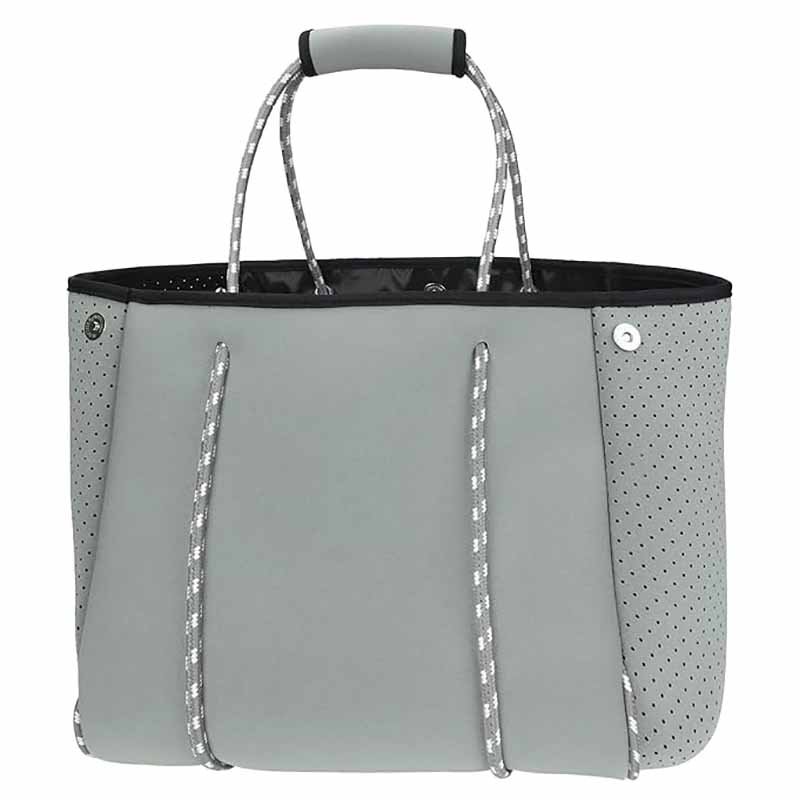
4. Perforation Design
- Improves breathability
- Reduces sand accumulation
5. Shoulder Comfort Design
- Wider straps
- Soft edges
Feature impact:
| Feature | User Benefit | Cost Impact |
|---|---|---|
| Inner pocket | Organization | Low |
| Base plate | Structure | Medium |
| Zipper closure | Security | Medium |
| Perforation | Breathability | Medium |
| Wide straps | Comfort | Low |
For brands, features are a key way to differentiate products without changing the core structure.
How to Customize Neoprene Beach Tote?
Customizing a neoprene beach tote is where a standard product becomes a brand product. It is not only about adding a logo. It involves choosing the right combination of materials, structure, color, printing method, and production setup to match your target market, price positioning, and usage scenario.
A well-developed custom tote should achieve three things at the same time:
- Look consistent with your brand identity
- Perform well in real beach use
- Stay within your target cost range
How to Print on Neoprene Beach Tote?
Printing on neoprene is different from printing on flat woven fabric. The surface is slightly textured, flexible, and layered, which means not every printing method works equally well.
Common logo options:
| Method | Visual Effect | Durability | Best Use |
|---|---|---|---|
| Screen printing | Solid colors, clean look | Medium | Simple logos, large quantity |
| Heat transfer | Sharp details, multi-color | Medium–High | Complex graphics |
| Sublimation (on laminated polyester) | Full coverage print | High | Pattern designs |
| Embroidery patch | Premium look | Very high | Branding upgrade |
| Rubber/TPU patch | 3D effect | High | Sports and lifestyle brands |
Key points to consider:
- Surface fabric matters → polyester-laminated neoprene is better for printing than nylon in some cases
- Stretch affects print durability → flexible inks or transfer films are preferred
- Placement matters → large flat areas work better than curved sections
In many successful designs, brands combine:
- Clean body color (neoprene base)
- Logo on panel, patch, or heat transfer
This creates a more controlled and professional look, especially for retail products.
Neoprene Beach Tote MOQ and Sample
MOQ and sampling are often the first questions in any custom project.
Typical structure:
| Stage | Quantity | Purpose |
|---|---|---|
| Sample | 1–2 pcs | Confirm design and structure |
| Small batch | 100–300 pcs | Market testing |
| Standard order | 500–2000 pcs | Regular sales |
| Large order | 3000+ pcs | Cost optimization |
At Oneier:
- MOQ can start from 100–200 pcs depending on design
- Sample lead time: 3–7 days
- Production time: 15–30 days
Factors that influence MOQ:
- Number of colors
- Printing method
- Material combination
- Structural complexity
For example:
- Simple tote + screen print → lower MOQ
- Multi-panel + zipper + patch → higher MOQ
Sampling is one of the most valuable steps. It allows you to:
- Test real load performance
- Evaluate comfort and balance
- Adjust size and proportions
- Check logo appearance
In practice, more than 60% of customers adjust details after sampling, especially handle length, thickness choice, and pocket layout.
Neoprene Beach Tote Cost Factors
Understanding cost structure helps you make better decisions and avoid unnecessary expenses.
Main cost components:
| Cost Factor | Impact Level | Notes |
|---|---|---|
| Neoprene material | High | Thickness and density matter |
| Fabric lamination | Medium | Affects surface quality |
| Size | Medium | Larger bags increase cost |
| Reinforcement | Medium–High | Improves durability |
| Logo method | Medium | Printing vs patch |
| Quantity | High | Higher volume reduces cost |
| Packaging | Low–Medium | Custom packaging adds value |
Typical factory price reference:
| Product Level | Price Range (USD) |
|---|---|
| Basic neoprene tote | $2.00 – $3.50 |
| Standard beach tote | $3.50 – $6.00 |
| Premium reinforced tote | $6.00 – $10.00+ |
- Reducing thickness or reinforcement may save 10–20% cost, but may reduce durability by 30–50%
- Choosing the right structure often gives better long-term value than choosing the lowest price
For brands, the goal is to find the best balance between cost, durability, and positioning.
Quality Control and Production Stability
Consistency is one of the biggest concerns in bulk production. A good sample means nothing if bulk production cannot match it.
Key quality control stages:
1. Material Check
- Thickness consistency
- Lamination strength
- Surface finish
2. Cutting Control
- Panel accuracy
- Edge condition
3. Sewing Inspection
- Stitch density
- Alignment
- Reinforcement accuracy
4. Functional Testing
- Load test (8–15 kg depending on design)
- Handle strength
- Shape retention
5. Final Inspection
- Logo quality
- Clean finishing
- Packaging consistency
Common issues and solutions:
| Problem | Cause | Solution |
|---|---|---|
| Handle tearing | Weak reinforcement | Extend handle stitching |
| Shape collapse | Thin material | Increase thickness |
| Surface peeling | Poor lamination | Improve bonding process |
| Uneven bag shape | Cutting deviation | Improve cutting accuracy |
At Oneier, production includes random inspection and stress testing to ensure each batch performs consistently under real use conditions.
Why Work with Oneier for Neoprene Beach Tote
Choosing the right factory can save time, reduce risk, and improve product results.
More importantly, Oneier focuses on real-use performance, not just appearance. The goal is to make sure your product works well after months of use, not just on the first day.
Start Your Neoprene Beach Tote Project
If you are planning to develop a neoprene beach tote, the fastest way to move forward is to start with a clear idea of your use case.
You can share:
- Target market (retail, promotional, premium)
- Expected size and capacity
- Logo and design concept
- Target price range
Based on that, Oneier can help you:
- Select the right neoprene thickness and structure
- Recommend suitable reinforcement and features
- Create samples for real-use testing
- Optimize production cost and timeline
Whether you are launching a new beach product line or upgrading an existing one, getting the manufacturing details right early will save time, reduce risk, and improve your final product quality.
Send your inquiry today and let Oneier help you develop a neoprene beach tote that performs as good as it looks.