
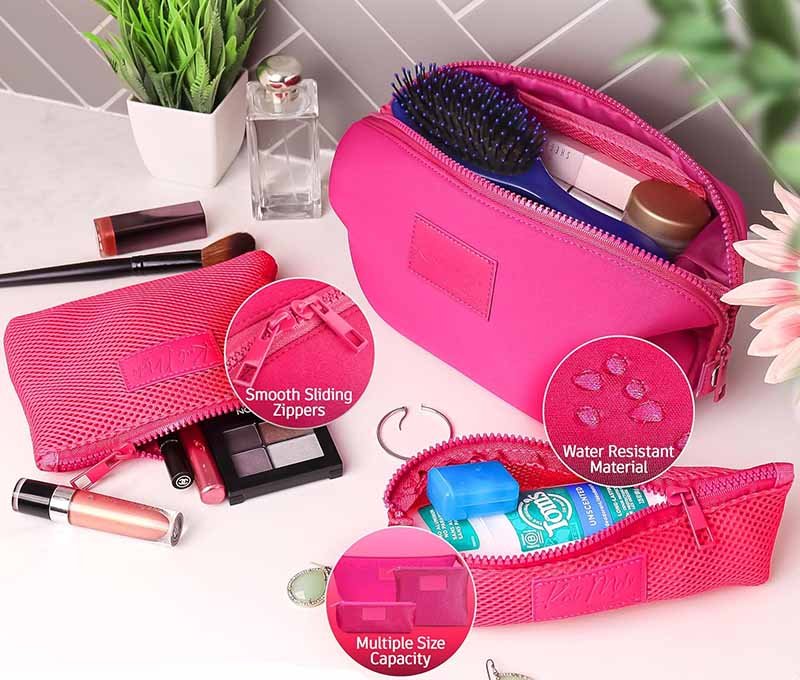
A neoprene makeup bag usually gets judged in a very simple way by the end user. They do not think about lamination, seam construction, zipper type, foam density, or stitch spacing. They only care about one result: when toner, serum, sunscreen, liquid foundation, or shampoo leaks inside the bag, will the bag hold up or will the mess spread into clothing, electronics, and the rest of the suitcase. That is why waterproof testing matters so much in this product category. A cosmetic bag can look soft, premium, and well-finished in product photos, yet still fail in actual use if water enters through the zipper area, stitch holes, or edge binding. For brands selling travel accessories, beauty gift sets, or private label cosmetic organizers, waterproof performance is not a small technical detail. It directly affects returns, product reviews, reorder rates, and brand trust.
Neoprene makeup bag waterproof testing is the process of checking whether a finished bag can resist water penetration in real use. It evaluates not only the neoprene material itself, but also the weak points that usually cause failure, such as seams, zipper openings, lamination layers, and edge finishing. Good waterproof testing helps confirm whether the bag can contain spills, resist moisture, and protect other items during travel and daily use.
Many product problems are not caused by neoprene itself. They are caused by construction choices. A bag may use good neoprene but still leak because the stitch line is too dense, the zipper tape is poorly attached, or the inner structure was designed without enough sealing support. That is why experienced factories do not stop at choosing a water-resistant material. They test the full bag the way customers actually use it. Once you look at waterproof testing from that angle, it becomes much easier to understand why some neoprene makeup bags stay reliable trip after trip while others start causing complaints after the first leak.
What Is Neoprene Makeup Bag Waterproof Testing?
Neoprene makeup bag waterproof testing is the process of checking how well a neoprene cosmetic bag resists water, spilled liquids, moisture exposure, and leak risk at the material level and at the finished-bag level. The most important point is this: testing is not only about whether neoprene repels water. It is about whether the complete bag stays reliable after sewing, lamination, zipper installation, and daily use.
What Is Neoprene in Neoprene Makeup Bag Waterproof Testing?
Neoprene is a synthetic rubber foam material known for flexibility, cushioning, thermal insulation, and strong resistance to water. It became widely known through wetsuits and protective gear, but it is also used in cosmetic bags, laptop sleeves, bottle holders, sports supports, and medical products because it combines softness with structure.
In a makeup bag, neoprene gives the product several useful functions at the same time. It adds body so the bag does not collapse too easily. It cushions fragile cosmetics such as glass serum bottles or compact cases. It also reduces how quickly water can penetrate through the material compared with many standard fabrics.
What makes neoprene different from ordinary textile materials is its internal foam structure. It contains many tiny closed cells, which slow water movement through the material. That is why neoprene usually performs better than plain woven fabric when exposed to splashes or damp environments.
The table below shows why neoprene is attractive for cosmetic bag use.
| Material Property | What It Does in a Makeup Bag | Why Customers Care |
|---|---|---|
| Closed-cell foam structure | Slows water penetration | Helps contain small spills |
| Soft cushioning | Protects cosmetic bottles | Reduces breakage risk |
| Elasticity | Allows flexible opening and packing | Easier to use during travel |
| Moderate structure | Helps bag keep shape | Better shelf appearance and usability |
| Thermal insulation | Reduces fast temperature transfer | Helpful for skincare items in travel bags |
In production, neoprene cosmetic bags are rarely made from raw neoprene alone. Most use laminated neoprene, which means the foam core is bonded with outer fabrics such as polyester or nylon jersey. This gives the bag better color options, printability, abrasion resistance, and a cleaner surface finish.
A common neoprene bag structure may look like this:
| Layer | Main Role |
|---|---|
| Outer polyester or nylon fabric | Color, print, abrasion resistance |
| Neoprene foam core | Cushioning, body, water resistance |
| Inner fabric or laminated backing | Cleaner interior and added stability |
This layered structure is important because waterproof performance depends on more than the middle foam. If the lamination is weak, water can creep between layers. If the outer fabric absorbs moisture quickly, the bag may feel wet even when the foam core remains resistant. If the inner structure traps leaked liquid, the user may think the entire bag failed even though the material itself did not.
For brands, this means one practical thing: when evaluating neoprene, do not ask only whether neoprene is waterproof. Ask what fabric is laminated to it, what thickness is being used, and how the whole bag is constructed. Those details matter much more in real product performance.
Why Is Neoprene Makeup Bag Waterproof Testing Important?
Waterproof testing matters because the real complaint from customers is rarely “the neoprene specification was incorrect.” The real complaint is usually much simpler: “my skincare leaked through the bag,” “the bag felt wet inside my luggage,” or “my makeup pouch did not protect my other items.” Waterproof testing exists to catch these problems before production is scaled.
A neoprene makeup bag may be used in several wet-risk situations:
bathroom counters, travel suitcases, gym lockers, beach trips, and daily carry with lotion, toner, sanitizer, cream, or perfume inside. These are normal use cases, not extreme use cases. So the product does not need to survive deep underwater use, but it does need to handle spills, splashes, humidity, and pressure from packed luggage.
The most common leak risk points are shown below.
| Risk Area | What Can Go Wrong | Result in Real Use |
|---|---|---|
| Stitch holes | Needle perforations allow liquid through | Small spills seep out slowly |
| Zipper area | Water passes through zipper coil or tape gap | Moisture enters from the top opening |
| Side seams | Uneven seam allowance or poor binding | Corners start leaking under pressure |
| Lamination edge | Delamination or weak bonding | Bag feels damp or separates over time |
| Bottom panel | Pressure from bottles stresses the seam | Leaks worsen when bag is overpacked |
Many brands underestimate how often these failures happen after shipping. A bag may pass visual inspection and still fail after a customer fills it with six travel bottles, presses it into a suitcase, and exposes it to temperature changes during a flight.
That is why waterproof testing has direct business value. It helps reduce:
- return rates caused by leakage complaints
- bad reviews related to travel use
- replacement costs for damaged customer orders
- disputes over product claims such as “waterproof” or “spill-resistant”
- hidden quality instability between production batches
The business impact can be significant. Even a 2% to 5% leakage-related complaint rate can become expensive when a brand is selling through Amazon, Shopify, retail chains, or travel accessory distributors. Complaint handling, refund processing, and image damage often cost more than the price difference between a basic construction and a better-tested one.
For Oneier customers, waterproof testing is especially important because neoprene bags are often used as premium private label items. Customers expect them to perform better than ordinary low-cost cosmetic pouches. That means the quality standard should match the sales promise.
Is Neoprene Always Waterproof in Neoprene Makeup Bag Waterproof Testing?
No. Neoprene is naturally resistant to water, but a neoprene makeup bag is not automatically fully waterproof just because neoprene is part of the structure. This is one of the most important points for brands to understand before developing or marketing the product.
The material and the finished bag are not the same thing. Neoprene foam may resist water well, but the final cosmetic bag still includes zippers, stitch lines, edge binding, puller openings, lining layers, and shaped corners. These areas often determine whether the product performs as expected.
A simple comparison makes this clearer:
| Product Part | Water Resistance Level | Main Limitation |
|---|---|---|
| Neoprene foam core | High | Usually not the first failure point |
| Laminated outer fabric | Medium to high | Depends on fabric type and finish |
| Stitch seam | Low to medium | Needle holes can allow seepage |
| Standard zipper | Low to medium | Water can enter through the opening |
| Bound edge or corner | Medium | Depends on workmanship and sealing |
This is why one neoprene makeup bag can feel very reliable while another, made from a similar foam thickness, leaks under light pressure. The difference often comes from construction choices rather than raw material alone.
There are also different waterproof expectations in the market, and brands need to define them clearly. In cosmetic bags, customers usually want one of three performance levels:
| Expected Use | Reasonable Performance Goal |
|---|---|
| Daily cosmetic storage | Resist minor moisture and bathroom splashes |
| Travel spill protection | Contain leaks from small cosmetic bottles |
| Wet-environment use | Better seam and zipper protection against exposure |
A makeup bag that survives sink splashes is not the same as a bag that can safely contain a leaking toner bottle in a tightly packed suitcase. A bag that resists rain is not the same as a bag that holds water without seepage. This is where many misunderstandings begin.
To improve performance, factories may use:
- thicker neoprene for better body and slower penetration
- tighter seam construction to reduce seepage paths
- seam sealing or reinforcement at critical areas
- coated or reverse zippers to reduce top-entry leakage
- better lamination control to avoid edge failure
For private label brands, the safest approach is to avoid broad claims and define the product according to real use. A good factory will help you match testing standards to the actual scenario instead of making unrealistic claims. Oneier’s advantage in this area comes from long-term neoprene product development experience. Since the company has spent more than 18 years working with neoprene materials and related sewn products, it can help clients evaluate not just the bag’s appearance, but the construction details that decide whether the product will hold up after the sale.
Which Tests Check Neoprene Makeup Bag Waterproof Testing?
Neoprene makeup bag waterproof testing normally includes several different evaluation methods because water can enter a bag in different ways. A cosmetic pouch may encounter splashes from a sink, pressure from leaking bottles inside the bag, or moisture during travel. Because these situations are different, manufacturers usually apply multiple tests to evaluate performance.
What Is the Spray Test in Neoprene Makeup Bag Waterproof Testing?
The spray test evaluates how well the outer surface of a neoprene makeup bag resists water droplets. During the test, a controlled amount of water is sprayed onto the fabric surface at a specific angle and pressure. The tester then observes how the water behaves on the material.
If the material performs well, water beads up and rolls off the surface rather than soaking into the outer fabric layer. If the material performs poorly, water spreads across the surface and begins to penetrate the material structure.
The spray test does not simulate internal leakage from cosmetics, but it is useful for understanding how the outer surface reacts to rain, bathroom splashes, or wet environments.
Below is a simplified evaluation system used in many textile tests.
| Spray Rating | Surface Performance |
|---|---|
| 100 | No wetting on the surface |
| 90 | Slight wetting near spray points |
| 80 | Partial wetting on surface |
| 70 | Surface begins absorbing moisture |
| Below 70 | Poor water resistance |
For cosmetic bags used in travel or bathroom environments, manufacturers generally aim for spray ratings above 80 to ensure acceptable moisture resistance.
The outer fabric laminated onto neoprene can influence this result significantly. Polyester jersey or nylon jersey surfaces usually perform better when treated with water-repellent finishes.
What Is the Pressure Test in Neoprene Makeup Bag Waterproof Testing?
The pressure test evaluates how well the neoprene material resists water penetration when exposed to continuous water pressure. This type of test is often called hydrostatic pressure testing in textile laboratories.
In the test, a sample of neoprene material is placed under controlled water pressure. The tester gradually increases the pressure until water begins to pass through the material.
The pressure level at which leakage begins indicates the water resistance level of the material.
Typical hydrostatic pressure levels for neoprene fabrics are shown below.
| Hydrostatic Pressure | Waterproof Level |
|---|---|
| Below 500 mm | Basic moisture resistance |
| 500–1000 mm | Light water protection |
| 1000–2000 mm | Good spill resistance |
| Above 2000 mm | Strong water protection |
For neoprene cosmetic bags, pressure levels between 800 and 1500 mm are generally sufficient because the bag is designed to resist spills rather than heavy outdoor rain.
However, this test mainly evaluates the material itself rather than the entire bag structure. Even if neoprene performs well under pressure, the finished bag may still leak through seams or zippers.
What Is the Leak Test in Neoprene Makeup Bag Waterproof Testing?
The leak test evaluates the finished cosmetic bag rather than just the material.
During this test, the bag is partially filled with water and sealed. The tester then applies light pressure or compression to simulate real usage conditions, such as a cosmetic bag being squeezed inside luggage.
The goal is to identify any areas where water escapes from the bag.
The test usually focuses on the following areas:
| Test Area | Reason |
|---|---|
| Side seams | Stitch holes may allow leakage |
| Bottom corners | Pressure accumulates here |
| Zipper line | Gaps may allow water entry |
| Edge binding | Weak bonding may leak |
Leak testing is especially important for cosmetic bags because most product failures occur at seams rather than in the material itself.
Factories often repeat the test multiple times with different water volumes to simulate various usage conditions.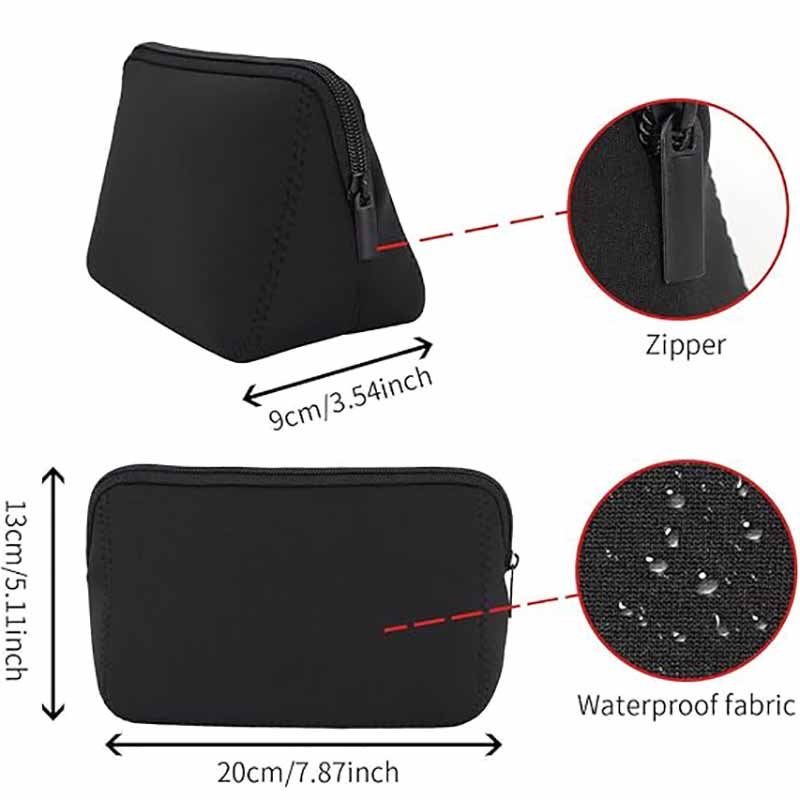
How Do Factories Do Neoprene Makeup Bag Waterproof Testing?
Waterproof testing in manufacturing environments usually combines material testing and finished product testing. Factories begin by evaluating the neoprene sheets themselves and then test the completed cosmetic bag to ensure the entire structure performs properly.
How Is Fabric Tested in Neoprene Makeup Bag Waterproof Testing?
Before production begins, neoprene fabric rolls are often inspected for thickness consistency, lamination strength, and moisture resistance.
Factories may perform simple absorption checks by placing water droplets on the surface and observing whether the outer layer absorbs or repels the moisture.
More advanced factories also measure neoprene thickness because thickness directly affects cushioning and water resistance.
| Neoprene Thickness | Typical Cosmetic Bag Use |
|---|---|
| 2 mm | Lightweight cosmetic pouches |
| 3 mm | Standard makeup bags |
| 4–5 mm | Protective travel cosmetic bags |
Thicker neoprene provides better cushioning and slightly stronger water resistance, but it also increases the weight of the finished product.
Therefore, manufacturers often recommend 3 mm neoprene as a balanced option for cosmetic bags.
How Are Seams Checked in Neoprene Makeup Bag Waterproof Testing?
Seams are one of the most common leakage points in neoprene cosmetic bags because stitching creates small holes in the material.
Factories therefore inspect seam construction carefully during testing.
The following factors influence seam waterproof performance.
| Seam Factor | Effect |
|---|---|
| Stitch density | Higher density improves strength but increases holes |
| Thread quality | Strong thread prevents seam separation |
| Seam allowance | Larger allowance improves durability |
| Edge binding | Reinforces the seam area |
In some cases, manufacturers may apply additional reinforcement to high-stress seams to reduce leakage risk.
Another method involves applying seam tape or lamination to protect the stitching area.
How Are Zippers Checked in Neoprene Makeup Bag Waterproof Testing?
Zippers are another critical factor in waterproof performance. Standard coil zippers allow small amounts of moisture to pass through the gaps between zipper teeth.
For cosmetic bags that require higher moisture resistance, manufacturers may use coated zippers or reverse coil zippers.
During testing, factories examine several aspects of zipper performance.
| Zipper Test | Purpose |
|---|---|
| Opening cycle test | Ensures zipper durability |
| Water exposure test | Checks leakage along zipper tape |
| Compression test | Evaluates zipper sealing under pressure |
If the zipper tape is not properly attached to the neoprene body, small gaps may form during use, allowing water to escape.
Factories with strong quality control procedures inspect these areas carefully before approving mass production.
Manufacturers such as Oneier, which specialize in neoprene products including bags, koozies, sports supports, and wetsuits, typically combine multiple inspection methods to ensure consistent waterproof performance.
By checking both materials and construction details, factories can significantly reduce the risk of leakage issues after the product reaches customers.
What Affects Neoprene Makeup Bag Waterproof Testing?
Waterproof testing results are influenced by several structural and material factors. Many brands assume that neoprene itself determines whether a cosmetic bag is waterproof, but the finished bag contains multiple components that can affect performance. Thickness, lamination fabrics, seam construction, and zipper design all play a role in determining how well a neoprene makeup bag resists water and liquid spills.
Does Thickness Affect Neoprene Makeup Bag Waterproof Testing?
Yes, neoprene thickness directly influences water resistance and cushioning. Thicker neoprene contains a larger volume of closed-cell foam, which slows the movement of water through the material. This structure also provides additional shock protection for fragile cosmetics such as glass serum bottles.
In cosmetic bag manufacturing, neoprene thickness usually ranges from 2 mm to 5 mm depending on the intended product style.
| Neoprene Thickness | Characteristics | Typical Application |
|---|---|---|
| 2 mm | Lightweight and flexible | Compact cosmetic pouches |
| 3 mm | Balanced flexibility and protection | Standard makeup bags |
| 4 mm | Strong cushioning and durability | Travel cosmetic organizers |
| 5 mm | Heavy protection | Protective storage bags |
Most cosmetic bags use 3 mm neoprene because it offers a good balance between water resistance, cushioning, and overall bag weight. Thicker materials improve durability but may make the bag heavier and less compact for travel.
Do Seams Affect Neoprene Makeup Bag Waterproof Testing?
Seams are often the weakest point in waterproof performance. Even if neoprene material resists water well, stitching creates small holes that allow liquid to escape or enter the bag.
Seam quality depends on several factors, including stitch density, seam allowance, and reinforcement methods.
| Seam Construction Factor | Effect on Waterproofing |
|---|---|
| Stitch spacing | Wider spacing reduces needle holes |
| Thread type | Strong threads prevent seam separation |
| Seam allowance | Larger allowances improve durability |
| Reinforcement tape | Reduces water penetration |
Manufacturers sometimes apply seam taping or bonding techniques to reduce leakage risk in high-stress areas.
For cosmetic bags designed for travel, reinforcing seams at the bottom corners and zipper ends is particularly important because these areas experience the most pressure when the bag is filled with items.
Do Zippers Affect Neoprene Makeup Bag Waterproof Testing?
Zippers are another critical factor affecting water resistance. Standard coil zippers contain small gaps between the teeth where moisture can pass through.
When cosmetic bags are exposed to spills or heavy moisture, water may enter through the zipper opening rather than through the neoprene itself.
Different zipper types offer different levels of protection.
| Zipper Type | Waterproof Performance |
|---|---|
| Standard coil zipper | Basic water resistance |
| Reverse coil zipper | Moderate resistance |
| Coated waterproof zipper | High resistance |
Many neoprene cosmetic bags use reverse coil zippers because they balance cost, durability, and water protection.
For products designed for higher waterproof performance, coated zippers with polyurethane layers can significantly reduce leakage.
Factories also test zipper durability through repeated opening cycles, sometimes exceeding 5,000 open-close cycles, to ensure long-term reliability.
How Should Brands Review Neoprene Makeup Bag Waterproof Testing?
For brands developing custom neoprene cosmetic bags, reviewing waterproof testing results is an important part of quality assurance. Testing helps confirm that the product meets performance expectations before large-scale production begins.
Which Standards Matter in Neoprene Makeup Bag Waterproof Testing?
Several textile and product testing standards are commonly used to evaluate water resistance.
| Test Method | Purpose |
|---|---|
| Spray test | Measures surface water repellency |
| Hydrostatic pressure test | Evaluates resistance to water penetration |
| Leak test | Detects seam or zipper leakage |
| Compression test | Simulates luggage pressure conditions |
While cosmetic bags do not usually require extreme waterproof performance like outdoor equipment, they should still pass basic spill resistance tests to prevent cosmetic liquids from spreading.
What Waterproof Level Is Enough in Neoprene Makeup Bag Waterproof Testing?
The required waterproof level depends on how the cosmetic bag will be used.
| Product Use | Recommended Waterproof Performance |
|---|---|
| Bathroom cosmetic pouch | Splash resistant |
| Travel makeup bag | Spill resistant |
| Outdoor cosmetic kit | Higher moisture protection |
For most travel cosmetic bags, the goal is not complete waterproofing but reliable spill containment. A bag should prevent leaked cosmetics from reaching other items in a suitcase.
Brands often evaluate waterproof performance by simulating real situations such as a leaking toner bottle or a damp travel environment.
How Do Manufacturers Support Neoprene Makeup Bag Waterproof Testing?
Manufacturers with experience in neoprene product development typically follow structured quality control procedures during production.
Factories like Oneier, which have more than 18 years of experience in neoprene material research and product manufacturing, use several inspection steps to maintain consistent quality.
| Quality Control Stage | Key Focus |
|---|---|
| Material inspection | Thickness and lamination consistency |
| Cutting inspection | Accuracy of panel dimensions |
| Sewing inspection | Seam strength and stitching quality |
| Leak testing | Water containment verification |
| Final inspection | Overall product performance |
These steps help ensure that neoprene makeup bags maintain stable waterproof performance across large production batches.
Start Your Custom Neoprene Makeup Bag Project with Oneier
Neoprene makeup bags combine flexibility, cushioning, and water resistance, making them a practical choice for cosmetic storage and travel use. However, the true performance of these bags depends not only on the neoprene material itself but also on seam construction, zipper design, and overall manufacturing quality.
By conducting proper waterproof testing and quality inspections, manufacturers can identify weak points in the bag structure and improve product reliability before the items reach customers.
With more than 18 years of experience in neoprene material development and product manufacturing, Oneier supports brands worldwide in creating custom neoprene products, including makeup bags, koozies, sports supports, wetsuits, and medical braces.
The company offers:
- low MOQ customization
- rapid sample development
- free product design assistance
- private label and OEM production
- strict quality control procedures
- reliable production lead times
Whether you are launching a new cosmetic accessory line or developing travel-ready makeup bags for your brand, working with an experienced neoprene manufacturer can help ensure your product meets real-world performance expectations.
If you are planning to develop custom neoprene makeup bags, contact Oneier today to discuss your project requirements, evaluate waterproof testing options, and request product samples tailored to your brand.