

If you sell products meant to protect people or keep things warm, your customers don’t judge you by material names—they judge you by outcomes. Does the knee support feel stable but not suffocating? Does the wetsuit still feel warm after 30 minutes in cold water? Does the laptop sleeve actually reduce impact, or is it just a pretty cover? Neoprene has become a go-to material in these categories because it solves multiple real-world problems with one engineered structure: it cushions, insulates, stretches, and resists moisture at the same time.
Neoprene is ideal for protective and insulating products because it is a closed-cell rubber foam that traps air for warmth, absorbs shock for protection, resists water uptake, and maintains flexibility across repeated bending and temperature change. That combination makes it highly suitable for bags, koozies, sports and medical supports, and wetsuits that must stay comfortable and reliable in daily use.
A common story we hear from brands is this: their first version used “water-resistant fabric + added foam.” It looked fine, but customers complained about stiffness, smell, and padding that collapsed. Switching to the right neoprene specification—often just adjusting thickness, density, and seam structure—can turn the same product into something customers keep, recommend, and reorder.
What Is Neoprene and How Is It Made?
Neoprene is a synthetic rubber foam made from chloroprene-based polymer, processed into a closed-cell structure and usually laminated with fabrics like nylon, polyester, or spandex. This foam-and-fabric system is why neoprene can feel soft yet protective, warm yet flexible. In manufacturing terms, neoprene is not “just a fabric”—it’s a tunable material platform where thickness, density, stretch, and lamination directly control product performance and cost.
What this means for customers
When a customer says “I want it warmer,” you often change thickness. When a customer says “I want it to last longer,” you often change density and lamination strength. When a customer says “I want it softer,” you adjust foam feel and lining.
What material is neoprene?
Neoprene is a closed-cell synthetic rubber foam. The “closed-cell” part is the secret: tiny sealed air pockets are trapped inside the foam. Air slows heat transfer and prevents fast water penetration, which explains neoprene’s two most obvious user benefits—warmth and water resistance.
Most commercial neoprene used in products is fabric-laminated on one or both sides. The surface fabric influences:
- how the product feels against skin
- how well it resists abrasion and pilling
- how clean the printing and logo look
- whether it dries fast or traps odor
This is why “neoprene” alone isn’t a complete specification. Two neoprene sheets can both be 3 mm but feel totally different depending on density and fabric lamination.
How is neoprene manufactured?
Neoprene production generally follows four technical stages:
- Polymer formation Chloroprene is polymerized into rubber base material.
- Foaming to create closed cells Controlled expansion creates micro cells that trap gas. Cell uniformity affects:
- insulation consistency
- compression recovery
- water absorption stability
- Vulcanization (curing) Heat/pressure stabilizes elasticity and mechanical strength.
- Lamination to fabric Foam is bonded to nylon/polyester/spandex fabrics using adhesive or thermal bonding. This step determines whether products later suffer from:
- bubbling under heat
- peeling at edges
- seam separation after bending
Factory reality: Many “cheap neoprene” problems are not foam problems—they are lamination control problems. Stable curing time and bond strength checks reduce those failures significantly.
What makes neoprene unique compared to other rubbers?
Neoprene stands out because it balances four qualities in one material:
- Elastic stretch (comfort and fit)
- Thermal insulation (air trapped in closed cells)
- Shock absorption (foam compression)
- Environmental resistance (better stability vs oils, salt, and weather)
Other materials usually do only one or two of these well. For example:
- Natural rubber stretches well but may age faster in UV/oils
- EVA foam cushions well but may crack or lose rebound over time
- Woven fabrics are strong but don’t insulate or cushion without extra layers
Neoprene’s advantage is that it can simplify product construction: fewer layers, fewer failure points, and often a better user feel.
Neoprene Specs That Actually Matter
This table is useful for product planning and for sending clear inquiry requirements.
| Spec | Common Range | What it changes in the product | Customer-visible effect |
|---|---|---|---|
| Thickness | 1–10 mm | warmth, cushioning, stiffness | “warmer / more padded” |
| Density | 150–300 kg/m³ | durability, rebound, weight | “premium feel / lasts longer” |
| Elongation | 150–300% | flexibility and fit | “comfortable movement” |
| Water absorption | generally low | drying speed, odor risk | “less heavy / less smelly” |
| Lamination fabric | nylon/poly/spandex | abrasion + comfort + printing | “softer / cleaner logo” |
Thickness Selection for Common Product Types
| Product Type | Recommended Thickness | Why it works |
|---|---|---|
| Laptop sleeve | 2–4 mm | impact protection without bulk |
| Cosmetic pouch | 2–3 mm | light weight + easy cleaning |
| Koozie / can cooler | 3–5 mm | strong insulation + grip |
| Knee brace | 3–7 mm | support + warmth |
| Surf wetsuit | 2–5 mm | flexibility + thermal balance |
| Cold-water dive suit | 5–10 mm | higher insulation and safety |
Thickness alone doesn’t guarantee quality. A 5 mm low-density foam can feel “flat” quickly. Many premium programs use moderate thickness + higher density for better long-term performance.
What Brands Should Confirm Before Mass Production
| Check Point | What to request/verify | What happens if skipped |
|---|---|---|
| Thickness tolerance | consistent within ±0.2–0.5 mm | fit inconsistency |
| Lamination bond | peel strength / heat aging test | peeling, bubbling |
| Seam strength | pull test on stress points | seam bursts |
| Color rub fastness | dry + wet rubbing | staining on clothes/skin |
| Odor control | storage test after sweat exposure | smell complaints |
| Edge finishing | binding/taping/glued edge | ugly curling edges |
Why Does Neoprene Provide Protection?
Neoprene protects not because it is hard, but because it is elastic and energy-absorbing. When force hits a neoprene surface—such as a dropped laptop sleeve or a bent knee brace—the closed-cell foam compresses, spreads the energy across a wider area, and then rebounds. This reduces peak impact and prevents sharp pressure points from reaching what is inside or beneath the material.
For product developers, the key insight is simple: protection in neoprene comes from controlled compression + fast recovery, not thickness alone. Correct density, cell structure, and seam placement are what determine whether a product truly protects or only looks padded.
How does neoprene cushion impact?
Impact cushioning happens in three physical steps:
- Initial compression – Foam cells collapse slightly under force.
- Energy distribution – Pressure spreads sideways through the foam matrix.
- Elastic rebound – Cells return toward original shape after the force disappears.
Because of this sequence, neoprene reduces peak shock intensity, which is the real cause of damage in electronics, joints, and fragile gear.
Drop protection comparison
| Material Layer | Peak Shock Reduction | Rebound Ability | Real-Use Result |
|---|---|---|---|
| Thin polyester fabric | Very low | None | Damage passes through |
| EVA foam pad | Medium | Moderate | Partial protection |
| Laminated neoprene | High | Strong | Noticeably safer feel |
Customers often describe this difference simply as “soft but protective”—a key emotional factor that increases product trust and reduces return rates.
What role do closed cells play in protection?
Closed cells are microscopic sealed air pockets inside neoprene foam. They are critical for two reasons:
1. Air resists sudden compression Trapped gas slows down how quickly force travels through the material. This lowers the sharpness of impact, which is more important than total force.
2. Cells prevent structural collapse Open-cell foams may flatten permanently after repeated pressure. Closed-cell neoprene maintains thickness and cushioning over time.
Structural stability comparison
| Foam Type | Water Absorption | Long-Term Compression | Protective Stability |
|---|---|---|---|
| Open-cell foam | High | Collapses faster | Weakens over time |
| EVA foam | Low | Moderate set | Medium stability |
| Closed-cell neoprene | Very low | Strong recovery | Stable protection |
This is why neoprene is preferred in reusable protective products rather than disposable padding.
Which protective products use neoprene?
Neoprene appears in many protective categories because it balances comfort + flexibility + shock absorption.
| Product | Protection Target | Why neoprene fits well |
|---|---|---|
| Laptop sleeves | Electronics impact | Soft cushioning without bulk |
| Camera pouches | Lens vibration | Elastic shock absorption |
| Knee & elbow braces | Joint strain | Warm compression + flexibility |
| Back supports | Muscle load | Even pressure distribution |
| Tool or bottle holders | Surface damage | Grip + padding |
Across these uses, the shared requirement is protection without stiffness. Hard shells protect strongly but feel uncomfortable. Soft fabrics feel comfortable but protect weakly. Neoprene sits in the middle—this balance is what makes it commercially valuable.
Why Is Neoprene an Excellent Insulator?
Protection is only half the story. Neoprene is equally valued for thermal insulation, especially in environments involving water, wind, or sweat evaporation.
The insulation effect comes from the same closed-cell structure that provides cushioning. Air trapped inside the foam slows heat transfer, helping the body—or an object—retain warmth longer than with woven fabrics alone.
For brands designing cold-weather, water-sports, or beverage-temperature products, thermal stability often determines customer satisfaction more than appearance.
How does neoprene trap heat?
Heat moves through materials by conduction and convection. Neoprene slows both:
- Closed cells reduce conduction because air transfers heat slowly.
- Limited airflow blocks convection, preventing warm air from escaping quickly.
This is why even thin neoprene layers feel noticeably warmer than fabric of similar thickness.
| Material | Relative Heat Retention | Typical User Feeling |
|---|---|---|
| Cotton fabric | Low | Cool, breathable |
| Polyester fabric | Low–medium | Neutral |
| Fleece | Medium | Warm but bulky |
| Neoprene | High | Warm and sealed |
Importantly, insulation depends on fit and seam sealing, not only thickness. Loose gaps allow water or air exchange that quickly removes warmth.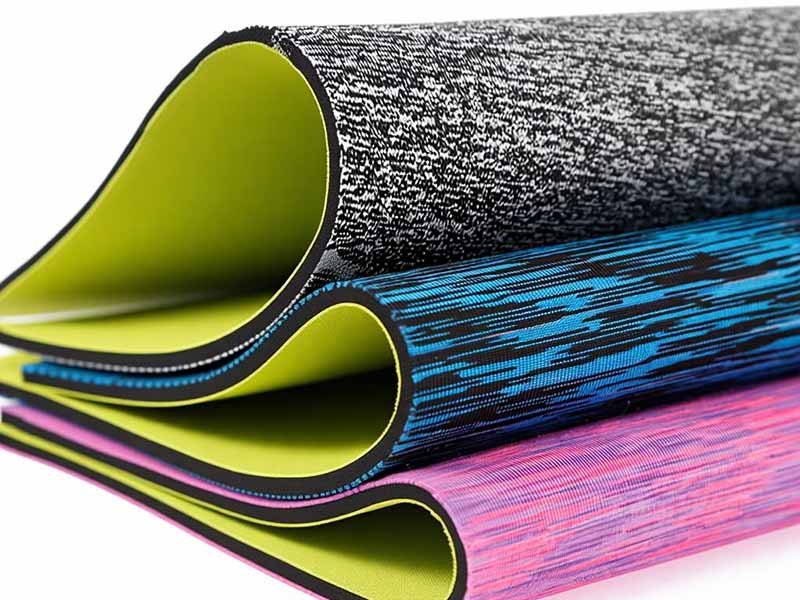
Why does neoprene resist cold environments?
Cold resistance is linked to water behavior. Water removes body heat far faster than air. Neoprene slows this process in two ways:
- Maintains a thin warmed water layer between suit and skin
- Prevents rapid water circulation that would carry heat away
This mechanism explains why wetsuits work even when fully submerged. The goal is not to stay dry—it is to control heat loss speed.
Water temperature vs neoprene thickness
| Water Temperature | Suggested Thickness | Safety Purpose |
|---|---|---|
| Above 24 °C | ~2 mm | Light warmth |
| 18–23 °C | ~3 mm | Balanced comfort |
| 12–17 °C | ~5 mm | Strong insulation |
| Below 12 °C | 7–10 mm | Cold-water protection |
Choosing incorrect thickness can lead to overheating or dangerous heat loss, making proper specification critical.
Which insulating products benefit most from neoprene?
Thermal performance matters most where temperature stability affects usability.
High-impact insulating neoprene products
| Product | Insulation Goal | Customer Benefit |
|---|---|---|
| Wetsuits | Maintain body warmth | Longer safe activity time |
| Gloves & socks | Protect extremities | Comfort in cold water |
| Beverage koozies | Slow temperature change | Drinks stay cold longer |
| Cooler sleeves | Reduce heat transfer | Extended freshness |
| Medical supports | Maintain joint warmth | Improved comfort during recovery |
Across these applications, the shared value is stable temperature with soft comfort, a combination difficult to achieve with rigid insulation materials.
How Does Neoprene Compare to Other Materials?
Neoprene is rarely chosen in isolation. Product developers usually compare it with polyester fabric, EVA foam, PU leather, and other cushioning or insulating materials before finalizing a design.
The decision is not simply about price. It is about how long the product lasts, how safe or comfortable it feels, and how customers perceive quality after repeated real-world use.
In many protective or thermal applications, neoprene becomes the preferred option because it delivers multiple performance functions in one layer, reducing structural complexity and long-term failure risk.
How does neoprene perform compared to polyester fabric?
Polyester is lightweight, strong, and cost-efficient, which makes it common in backpacks and apparel. However, polyester alone provides almost no cushioning or insulation. To achieve protection, designers must add foam layers, quilting, or padding—each introducing extra seams, weight, and potential failure points.
Neoprene integrates soft cushioning + moderate structure + water resistance into a single laminated sheet. This reduces internal components and improves long-term consistency.
Polyester vs neoprene in protective use
| Property | Polyester Fabric | Neoprene |
|---|---|---|
| Impact absorption | Very low | High |
| Thermal insulation | Very low | High |
| Water resistance | Medium | Strong |
| Structural simplicity | Low (needs padding) | High (built-in foam) |
| Comfort against skin | Medium | Soft and elastic |
Because of these differences, polyester is still suitable for lightweight fashion or low-cost bags, while neoprene is preferred when comfort, safety, or insulation directly affect user satisfaction.
What advantages does neoprene have over EVA foam?
EVA foam is widely used for shock absorption in cases and footwear. It offers good cushioning and low water absorption, but it behaves differently from neoprene in long-term use.
EVA is generally less elastic and may develop permanent compression marks after repeated pressure. Neoprene, in contrast, is engineered for elastic recovery, allowing it to rebound closer to its original thickness.
Another difference is surface comfort. EVA often requires fabric covering or molding to feel pleasant against skin, while neoprene already includes laminated textile surfaces that improve touch and flexibility.
EVA vs neoprene in cushioning stability
| Factor | EVA Foam | Neoprene |
|---|---|---|
| Elastic rebound | Medium | High |
| Long-term compression set | Higher | Lower |
| Skin comfort | Medium | High |
| Structural flexibility | Limited | Excellent |
| Multi-function insulation | Medium | Strong |
For rigid protective shells, EVA may still be suitable. For wearable protection or soft insulated gear, neoprene usually performs better.
Are there trade-offs in cost or weight?
No material is perfect. Neoprene’s advantages come with specific trade-offs that brands must evaluate carefully.
Cost: Neoprene is generally more expensive than thin fabrics but can replace multiple internal layers, sometimes balancing total product cost.
Weight: Thicker neoprene adds noticeable weight. For ultralight products, designers may combine thin neoprene panels with lightweight textiles.
Breathability: Closed-cell insulation limits airflow. In sports supports, this requires perforation, mesh lining, or panel shaping to maintain comfort.
| Priority | Better Choice |
|---|---|
| Lowest cost | Polyester |
| Lightest weight | Thin fabric / EVA |
| Highest comfort + protection | Neoprene |
| Thermal insulation | Neoprene |
Understanding these trade-offs early prevents misaligned pricing, poor reviews, or redesign delays.
What Product Types Are Best with Neoprene?
Neoprene works best where soft protection or temperature stability directly affects performance. Instead of trying to use neoprene everywhere, successful brands focus on specific product categories where its strengths are clearly visible to customers.
Which neoprene bags provide real protection?
Protective neoprene bags are designed to absorb shock and prevent surface damage during daily transport.
Common high-performance categories include:
- laptop and tablet sleeves
- camera pouches
- insulated bottle carriers
- gym duffel bags with soft structure
These products benefit from moderate thickness (2–6 mm) combined with reinforced seams and durable lining.
When designed correctly, neoprene bags often achieve:
- fewer electronic damage claims
- better comfort during carrying
- higher perceived product value
This directly improves brand reputation and reorder rates.
Which neoprene sports guards are most effective?
Sports and rehabilitation supports rely heavily on controlled compression and thermal retention.
The most effective neoprene guards include:
- knee braces for joint stability
- elbow supports for repetitive motion protection
- back belts for posture and lifting support
- shoulder wraps for muscle warmth
Performance depends on density balance and ergonomic panel shaping, not just thickness. Too stiff restricts movement; too soft reduces support. Properly tuned neoprene achieves support with mobility, which is what athletes and patients expect.
Which neoprene accessories deliver insulation?
Accessories show neoprene’s insulating power clearly because temperature change is easy to notice.
High-impact examples:
- beverage koozies slowing heat transfer
- cooler sleeves maintaining freshness
- thermal gloves and socks for water sports
- medical wraps keeping joints warm
Even small neoprene thickness can produce visible temperature stability, making these products popular in promotional, outdoor, and healthcare markets.
How Can Brands Customize Neoprene Products?
Customization transforms neoprene from a raw material into a market-ready branded product. Because neoprene is engineered, manufacturers can adjust structure, appearance, and function with precision.
What customization options are available?
Key adjustable parameters include:
- thickness and density for protection level
- fabric lamination type for texture and durability
- color printing or embossing for branding
- perforation or mesh panels for breathability
- reinforced stitching or taped seams for strength
These variables allow brands to position products across budget, mid-range, or premium markets without changing the core material family.
How do printing and logo applications work?
Neoprene supports several branding methods:
- heat transfer printing for detailed graphics
- screen printing for bold logos
- embossing for subtle premium texture
- woven or rubber labels for durability
Correct method selection depends on:
- order quantity
- color complexity
- durability expectations
- cost target
Choosing the wrong printing process can lead to fading, cracking, or peeling, so early technical confirmation is important.
How do OEM, ODM, and private-label projects proceed?
A stable neoprene manufacturing workflow usually includes:
- Requirement discussion – product use, size, target price
- Material specification – thickness, density, lamination, seams
- Sampling and testing – fit, comfort, durability verification
- Adjustment stage – correcting weak points before mass production
- Controlled production and inspection – ensuring batch consistency
This structured process reduces development risk and unexpected quality issues.
Start Your Custom Neoprene Project with Confidence
Protective and insulating products succeed when material science, ergonomic design, and manufacturing control work together. Neoprene offers a rare balance of comfort, durability, shock absorption, and thermal stability, making it one of the most reliable choices for modern product development.
With more than 18 years of experience in neoprene material R&D and product manufacturing, Oneier supports global brands through:
- low-MOQ custom production
- rapid sampling and design assistance
- stable quality control across repeat orders
- OEM, ODM, and private-label services
If you are planning to develop neoprene bags, braces, wetsuits, koozies, or other protective and insulating products, the next step is a focused technical discussion based on your target market, price range, and performance expectations.
Contact Oneier today to explore tailored neoprene solutions and receive professional recommendations for your custom project.